Abelardo de la Espriella Sworn In as Colombia's President, Signaling Major Policy Reversal
Known as 'El Tigre,' the new conservative leader has pledged to dismantle his predecessor's left-wing policies and adopt a more stringent approach to national security and economic affairs.
World·
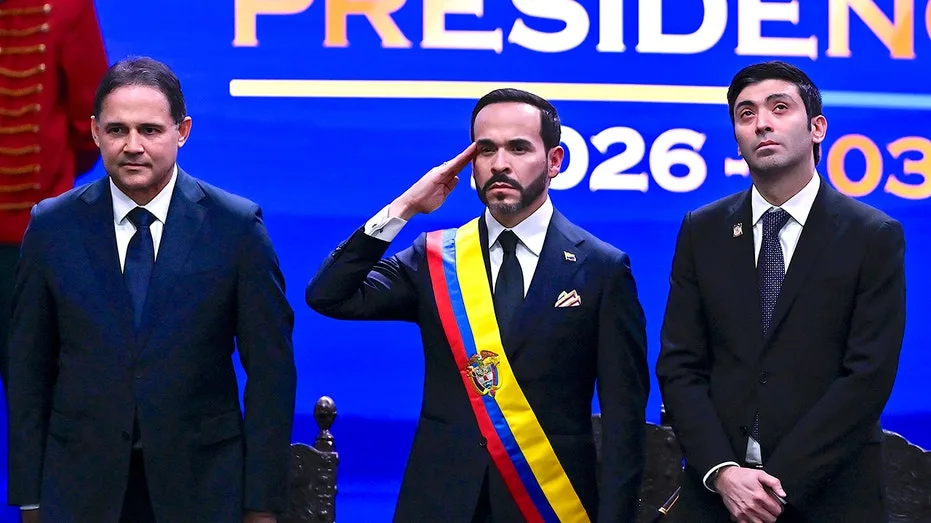
Colombia embarked on a new political trajectory as conservative President Abelardo de la Espriella officially assumed office on Friday. He has committed to undoing many of former President Gustavo Petro’s left-leaning initiatives and re-establishing a firmer stance on security, economic strategy, and diplomatic engagement with the United States.
De la Espriella, widely known by his moniker “El Tigre” (the tiger), saw his inauguration heralded as one of Latin America’s most notable political shifts in recent memory. Following four years under socialist President Gustavo Petro’s “Total Peace” strategy, which saw an expansion of coca cultivation and increasingly strained ties with Washington, President de la Espriella now faces the formidable task of transforming his campaign promises into governmental realities.
Distinguished conservative leaders from across the region attended the inauguration, including Argentina’s Javier Milei, Ecuador’s Daniel Noboa, and Chile’s José Antonio Kast. The U.S. delegation included Acting U.S. Attorney General Todd Blanche. Also present were Spain's King Felipe VI and FIFA President Gianni Infantino.
“I have come to close a long chapter of national resignation and, together with the people, embark on the most profound transformation of our destiny,” De La Espriella stated during his address at the Pichincha Battalion military base in Cali, as reported by Reuters.
He continued, “I send a firm message to the Colombian people: The time has come to restore order, authority, and freedom.”
According to Reuters, one of his initial presidential actions was to join The Shield of the Americas, an alliance originally founded by President Donald Trump.
Realigning International Relations
For the United States, Colombia remains its closest security ally in South America, a vital trading partner, and one of the region’s primary recipients of U.S. security assistance. Hundreds of American businesses operate within Colombia, and the country’s security conditions directly impact regional migration patterns, organized crime, and narcotics trafficking.
On the international stage, the new president has vowed to rebuild strategic alliances with the United States, foster closer collaboration with Israel, and adopt a more assertive posture toward the authoritarian governments of Venezuela, Cuba, and Nicaragua.
Navigating Domestic Challenges
The new administration inherits significant domestic obstacles. As one analyst, Guzmán, observed, “President de la Espriella inherits a house with the roof leaking and the safe empty. The order matters because almost everything he promised requires money he does not have.” Guzmán highlighted Colombia’s deteriorating fiscal condition as the most immediate hurdle facing the government.
“Start with the fiscal picture. It is worse than his own team seems to expect. The 2026 deficit is tracking around 6.5-6.7% of GDP, the financing gap is close to $34 billion and the implicit medium-term adjustment being left on his desk is near five points of GDP. It is also a cash problem, not only an accounting one. Before he governs, he must make payroll.”
The International Monetary Fund forecasts Colombia’s economy will grow by only approximately 2.3% this year, while inflation persists at elevated levels. This economic climate severely constrains the government’s capacity to fund new security initiatives or substantial economic reforms without implementing additional spending cuts or introducing new revenue measures.
Addressing Security Concerns
Security presents an equally formidable challenge. Violence has escalated across various regions as criminal organizations and guerrilla groups have expanded their territorial control over the past several years.
Guzmán noted, “Security is the second fire. The first half of 2026 closed with the highest homicide count for any first semester in a decade, extortion still rising and armed groups that have grown sharply since 2022. Security is rebuilt in years, not in quarters. Expect operations, captures and hard rhetoric in the first 100 days, visible and real, but not yet structural.”
Building Consensus in Congress
Even if the administration moves swiftly on executive actions, its legislative agenda will rely heavily on forging consensus within a fragmented Congress. Despite de la Espriella’s presidential victory, his party holds only five seats in the Senate, while Petro’s Historic Pact remains the largest individual political bloc. Passing crucial security reforms, fiscal legislation, and broader economic initiatives will necessitate negotiations with centrist and traditional parties on virtually every major proposal.
Guzmán believes these political realities could prove as critical as the security challenges. “He won the election; he did not win Congress. The July fight over the Senate presidency was the first warning. He has a coalition that is numerically large and poorly disciplined. His agenda will be negotiated bill by bill.”
The First 100 Days: Signals, Not Results
For these reasons, analysts caution against evaluating the administration’s success solely by immediate outcomes. Instead, the initial 100 days are likely to be judged on whether the new president can establish credibility, assemble an effective governing team, and demonstrate that his campaign promises can evolve into a cohesive governing strategy.
Guzmán concluded, “The realistic expectation is this: the first 100 days will produce signals, not results. Appointments, decrees, an emergency spending cut, a tax bill, a security package. Meanwhile, expectations are enormous, and the distance between what people were promised and what is physically possible in 100 days is the main political risk he faces. He will spend those 100 days putting the house in order. He should say so out loud, and early. Credibility is the one asset he can build by day 100.”
Investors and policymakers will be closely observing several key decisions, including whether De la Espriella formally abandons Petro’s negotiations with the ELN guerrilla group, resumes aerial coca fumigation, expands intelligence and security cooperation with Washington, restores full diplomatic engagement with Israel, and introduces a credible fiscal adjustment plan.
These early actions, analysts suggest, will provide the clearest indication of whether Colombia’s new president can begin to deliver on his pledge to reverse the era of his predecessor, or if the country’s profound fiscal, political, and security challenges will compel him to moderate one of the most ambitious conservative agendas in modern Colombian politics.
Related Stories
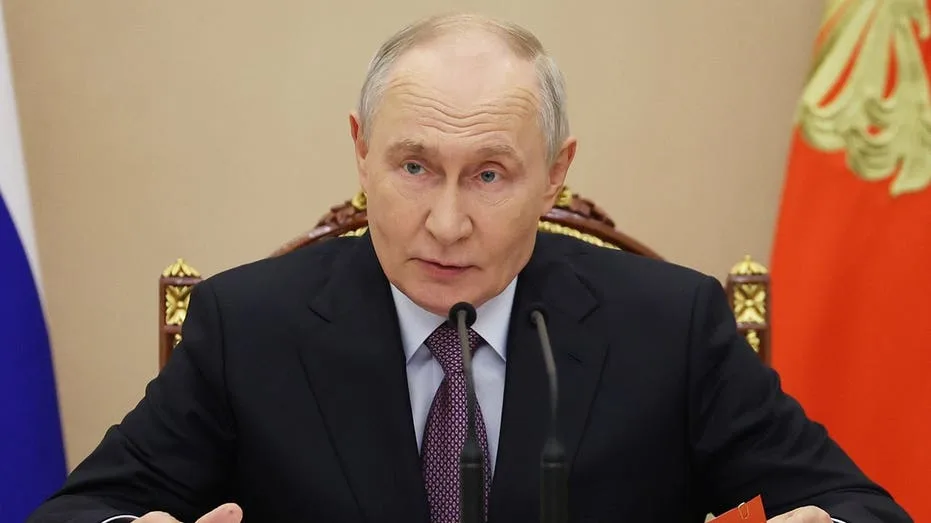
US Intelligence Suggests Russia Could Target NATO Ally to Test Alliance Cohesion
A recent US intelligence report suggests Russia may attack a NATO country by 2029, potentially using cyber or limited ground incursions. This aims to test Article 5 and fragment the alliance amidst Ukraine's gains,
Aug 7

Deadly Incident on Russian Black Sea Beach: Conflicting Accounts Emerge After Drone Strike Kills Seven
Seven people, including four children, died and dozens were injured after a projectile struck a crowded beach in Arkhipo-Osipovka, Russia. Russian authorities claim a Ukrainian drone targeted civilians, while Ukraine
Aug 6
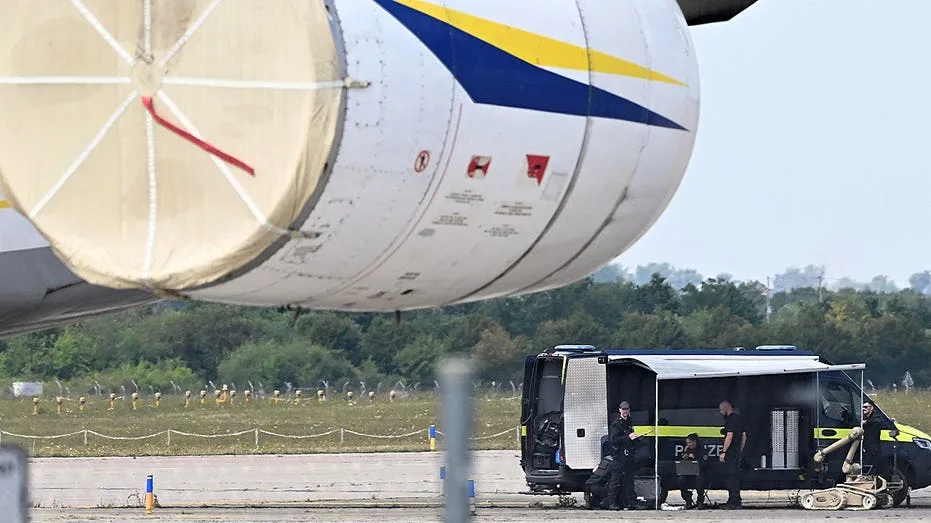
Explosive Drone Discovery Forces Shutdown at Major German Airport, Diverts Flights
Operations at Germany's Leipzig/Halle Airport were disrupted after an explosive-laden drone was discovered near a Ukrainian aircraft. The incident, deemed a "new threat scenario" by officials, prompted runway closures
Aug 5
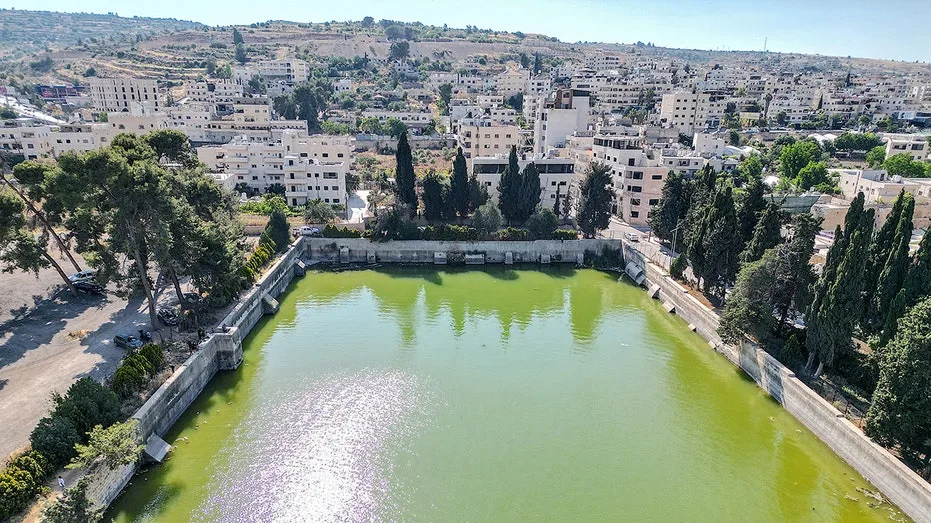
Ancient Solomon's Pools Spark Modern Dispute Over Heritage and Jurisdiction
Solomon's Pools, an ancient water system supplying Jerusalem for millennia, are now at the heart of a political conflict. Israeli officials allege the Palestinian Authority, which holds jurisdiction, has allowed the
Aug 4