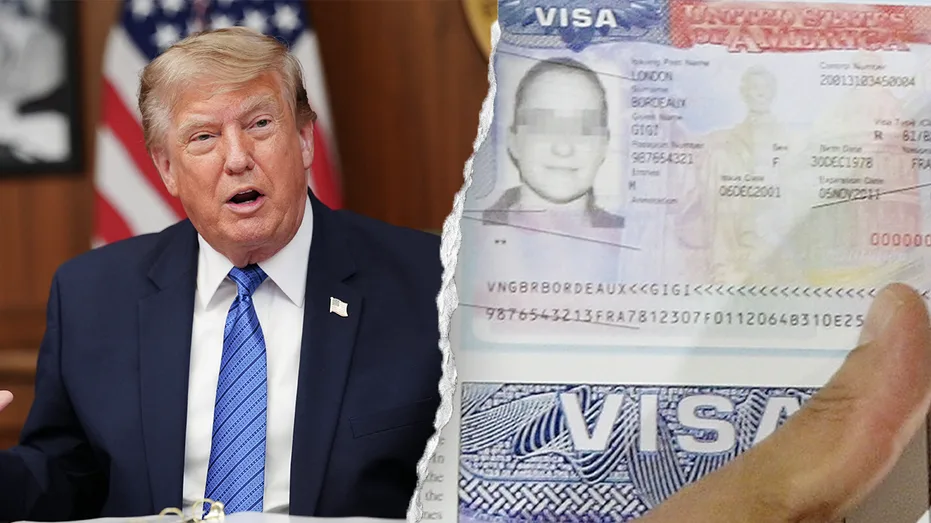
A collection of labor unions and advocacy organizations filed a lawsuit on Tuesday, aiming to halt the enforcement of new visa restrictions introduced by the Trump administration. These regulations would impose limits on the duration foreign students and journalists can remain in the United States without seeking extensions.
The Department of Homeland Security (DHS) has established fixed periods of admission for individuals holding F status as international students, J status as exchange visitors, and I status as foreign journalists. Traditionally, those in these categories were granted admission for the entire length of their academic programs, exchange initiatives, or specified media assignments, rather than for a predetermined date.
New Visa Durations and Extension Requirements
Under the new rule, which is scheduled to come into effect on September 15, F-status students and J-status exchange visitors will generally be admitted for the duration of their programs, with a maximum initial period of four years. To remain longer, they would be required to apply for an extension.
For most foreign journalists on I status, whose stays could previously span several years, the admission period will now be capped at 240 days. Journalists presenting passports from the People's Republic of China (excluding holders of Hong Kong and Macau SAR passports) would typically be granted admission for a maximum of 90 days. These journalists may seek extensions for up to 240 days (or 90 days for the specified PRC passport holders), but not beyond the length of their assigned work.
The coalition contends these new changes would be "catastrophic" for universities, international students and scholars, and the United States as a whole.
"They will discourage foreign students and other nonimmigrants from coming to the United States, repelled by the intolerable prospect of losing lawful immigration status partway through their studies," the groups asserted in their legal filing.
The regulation does not mandate that international students complete their studies within four years; those enrolled in longer programs are still able to apply for extensions of their stay. Additionally, the rule introduces new limitations on transfers and changes in educational objectives, affecting some graduate-level students.
Economic Concerns and DHS Response
It is worth noting that foreign students typically pay higher tuition rates and have fewer scholarship opportunities. Consequently, the proposed rule could have significant financial implications for U.S. educational institutions if it results in a decline in international enrollment.
"Students will lose opportunities, schools will lose talent, and the public will lose billions of dollars of economic contributions supported by one of the United States’ top exports: education," the complaint states.
The Department of Homeland Security has dismissed the lawsuit as "performative," maintaining that the changes are designed to combat fraud, despite not offering specific evidence of the alleged fraud. DHS has stated that establishing fixed periods of admission will enable immigration officials to routinely assess whether visa holders are adhering to the conditions of their status.
A department spokesperson commented in a statement, "If the media really cared about legitimate international students, they would be thanking President Trump for cracking down on the rampant fraud to ensure only those truly intending to study in the United States are given the privilege."
Journalists' Concerns and Democratic Implications
Jon Schleuss, President of NewsGuild-CWA, an organization representing thousands of media professionals across the U.S., characterized the rule as an assault on journalists.
"In addition to attacking international students and scholars, the Trump administration is again attacking journalists by also shortening the duration of I Visas, which support the important work of international journalists working in the United States," Schleuss stated. "Our First Amendment makes it clear that the United States is supposed to be a champion of a free press, not an opponent. These rule changes are just another attempt by this administration to chill reporting done by talented journalists."
He further added, "Our democracy depends on journalism and journalism depends on journalists of all stripes. We are proud to stand with other partners and fight these illegal rule changes intended to weaken our democracy."
DHS had previously indicated that requiring periodic evaluations for foreigners seeking longer stays in the U.S. would allow the agency to exercise "proper oversight" and reduce the overall number of individuals in the country on visas.