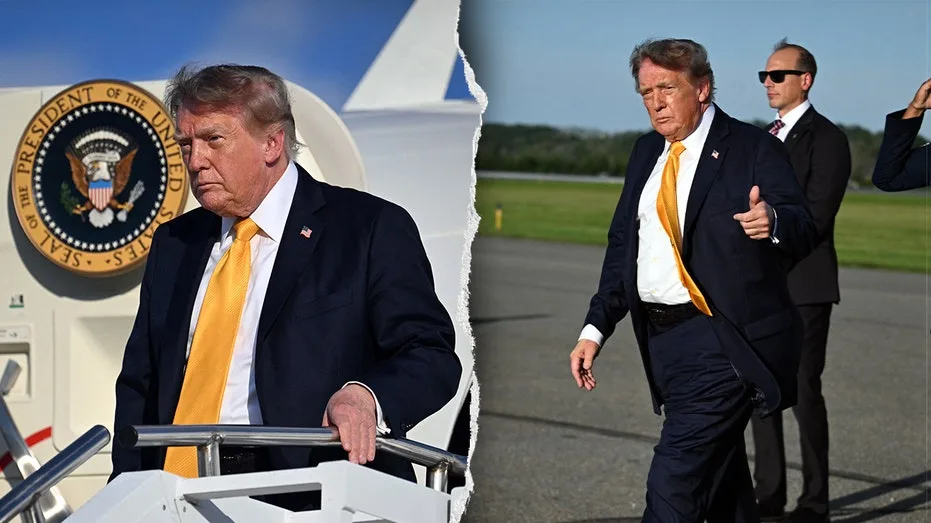
A recent national survey has uncovered a pronounced generational disparity in how Americans view China as a potential threat to the United States. The findings indicate that younger adults are considerably less likely than their older counterparts to perceive Beijing as a major concern, representing one of the most significant demographic divides in current U.S. foreign policy attitudes.
Generational Divide on China's Threat
The Ronald Reagan Institute Summer Survey reports that a striking 93% of Americans aged 65 and over expressed apprehension regarding China's capacity for espionage against the U.S. In contrast, only 62% of individuals between 18 and 29 years old shared this level of concern. This pattern of lower concern among younger demographics was consistent across several key areas. For instance, only 56% of younger Americans were troubled by the potential for China to use military force against Taiwan, compared to 86% of seniors. Similarly, concerns about technology theft stood at 61% for the younger group versus 91% for older adults. The acquisition of U.S. land by Chinese entities worried 68% of younger respondents, while 93% of seniors found it concerning. Furthermore, China's role in the illicit flow of fentanyl into the United States was a concern for 68% of younger adults, compared to 92% of those aged 65 and above.
National Concerns and Diplomatic Efforts
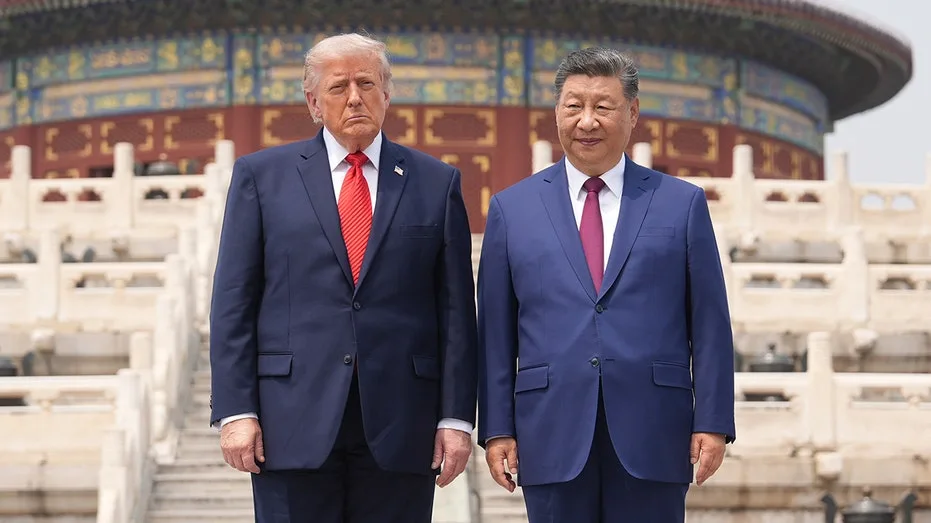
Despite these notable generational differences, a high level of concern about China persists across the nation overall. More than 80% of Americans, irrespective of age, reported apprehension about China's involvement in the fentanyl crisis, its surveillance capabilities, and its purchases of American land. Additionally, 66% of respondents nationally affirmed the importance of Taiwan's security to the United States. These survey results emerge as both Washington and Beijing are engaged in efforts to stabilize their complex relationship, which has seen years of escalating economic and military tensions. Following the imposition of substantial tariffs on Chinese goods early in his administration, President Donald Trump held a meeting with Chinese President Xi Jinping in China in May. During this summit, a series of trade and investment agreements were announced, coupled with a commitment to ongoing dialogue. After the May meeting, President Trump characterized Xi as a "great leader" and China as a "great country," telling journalists that "We settled a lot of different problems that other people wouldn't have been able to solve."
While national apprehension regarding China remains prevalent, the survey suggests a distinct perspective among younger Americans compared to older generations regarding the U.S.'s primary geopolitical competitor. This divergence prompts questions about how public opinion might evolve as younger voters constitute an increasingly larger segment of the electorate. The findings also contrast with the views commonly held by many national security specialists, who often describe China as America's principal long-term near-peer competitor and adversary, even amidst diplomatic overtures to stabilize relations.
"There is rightful alarm regarding China's historic military buildup and the expansion of its military activities in the region and beyond," stated War Secretary Pete Hegseth at the Shangri-La Dialogue in Singapore in May. He added that U.S.-China relations were "better than they've been in many years."
Evolving Views on Global Engagement
Further research also points to broader distinctions in how younger generations approach U.S. foreign policy. A 2025 Carnegie Endowment survey, for example, indicated that younger Americans were less inclined than older generations to prioritize maintaining U.S. technological superiority over China. Generally, they also favored a less expansive role for American leadership on the global stage. The Reagan Institute Summer Survey, which serves as the organization's annual poll on foreign policy and national security, aims to gauge American perspectives on topics such as global involvement, military strength, and specific regions like China, NATO, and the Middle East, as well as democratic values. The poll also identified significant partisan shifts concerning America's appropriate role in the world. Republicans were more prone than Democrats to advocate for increased U.S. engagement and leadership in international affairs. Specifically, 71% of Republicans believed the U.S. should assume a leading international role, compared to 55% of Democrats. Overall, 61% of Americans supported greater U.S. engagement globally, while 27% preferred a more restrained approach. These results mark a notable departure from previous years. Over the past year, Democratic support for enhanced U.S. involvement declined from 65% to 55%, while Republican support increased from 69% to 71%. This led to a widening of the partisan gap from four percentage points to 16. The survey also revealed that 43% of Democrats now consider U.S. involvement in global affairs to be detrimental, a significant increase from 22% just one year prior.
Survey Details and Broader Context
The survey was conducted between May 26 and June 3, encompassing 1,555 U.S. adults, and has a margin of error of plus or minus 2.5 percentage points. Researchers employed a mixed-mode methodology, incorporating live telephone interviews, an online panel, and text-to-web responses. To ensure the results accurately reflect the U.S. population, the data was weighted using demographic benchmarks from the U.S. Census Bureau's 2023 American Community Survey, including factors like age, gender, race, region, and education. The survey also included an oversample of 338 self-identified MAGA Republicans under the age of 30, for which the margin of error is plus or minus 5 percentage points. These findings are released following a year in which the Trump administration adopted a more assertive stance internationally than some had anticipated. Beyond ordering strikes on Iran, the administration expanded military operations against targets linked to cartels in the Western Hemisphere and took action to capture former President Nicolas Maduro of Venezuela. Such actions have reignited public discourse surrounding American power and global leadership.