The U.S. Supreme Court's 6-3 decision to affirm state legislation protecting women's sports categories marked a significant moment for advocates like Riley Gaines. However, Gaines openly acknowledged the considerable personal toll the ongoing advocacy has taken.
"It's exhausting that in the year 2026, we are still having this conversation, that the highest court in the land is having to rule on, on such insanity, when, I mean, I think even just 10 years ago, we wouldn't have necessarily celebrated this ruling. We would've kind of been like, 'yeah, duh. This is, like, the default.' It's the standard position for anyone to take. Of course we don't want boys in girls' sports. But now we find ourselves celebrating, which is a, a telltale sign of the times, of where we're at culturally and socially. Um, and so there's still more work to do."
Gaines is already contemplating the subsequent stages of this effort, recognizing that achieving these goals will necessitate broader support beyond the Supreme Court's six votes.
"Number one, Congress to act," Gaines stated. "We need, we, we need Congress to codify President Trump's executive orders... I think we need real enforcement mechanisms as well for those who continue to suffer from the very real diagnosable crippling disease that is TDS... What we're going to see make the biggest change, is when people, your everyday person, so think of parents, coaches, etc., when they're bold enough to defend their daughters or defend their athletes or defend themselves, um, that's when you see real change."
Advocacy and Public Engagement
During the oral arguments for the cases that led to this week's ruling, Gaines spearheaded a rally on the Supreme Court steps. Her gathering of women's sports proponents stood in stark contrast to a group of pro-transgender activists nearby, whom Gaines described as loud and confrontational.
"They're so angry," Gaines remarked about the opposing crowd. "You look across the bike racks that were there separating us, and you saw anger, and you saw negativity, and you saw screaming, and you saw vitriol, and you saw colored hair, and you saw piercings, and you saw what I would describe, honestly, just visually looking at it, was island of the misfit toys. Not to be like, mean, but just speaking pretty objectively here."
At the time of that rally, Gaines was a new mother, and notably, she wrapped her infant daughter, Margot, in a bulletproof blanket while addressing the public. As she looks ahead to the next phase of this "exhausting" multi-year campaign, Gaines anticipates a growing cohort of female athletes joining her cause.
Diverse Voices on the Ruling
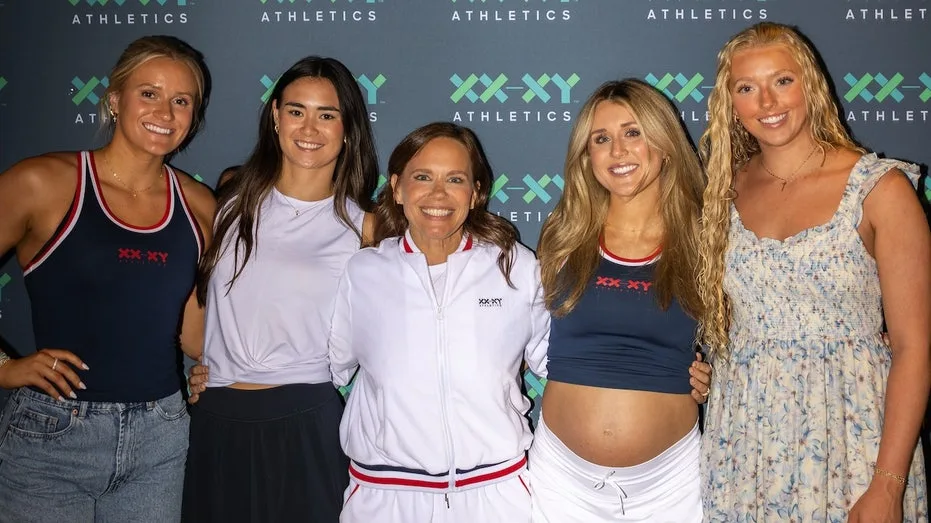
Many other current and former female athletes engaged in this advocacy shared their perspectives following the announcement of the court's decision.
A key figure in the "Save Women's Sports" movement, envisions a successful culmination for the movement as a widespread shift in societal norms.
"There’s still a lot of work to do. It’s why I keep saying we have to focus on changing the culture, because I think once we do that, all of the governing bodies will fall in line and protect the women’s category," she elaborated.
Her organization has played a crucial role in expanding the movement, actively recruiting accomplished Olympians and other prominent women affected by the issue to serve as brand ambassadors.
Another advocate, emphasized the need for consistent protections nationwide.
"More work needs to be done. We need to see protections in all 50 states in this country. Why should a girl in Texas have different rights than a girl in Connecticut, or New York?" she questioned. "It's disappointing also to learn that it's not 9-0. That's something I'm upset about. But I take this win."
Brooke Slusser, a former volleyball player from San Jose State, characterized the Supreme Court's Tuesday ruling as the most significant victory yet for female athletes. For Slusser, who emerged as a leading voice in the effort to protect women’s sports after speaking out in 2024 about a transgender player on her team, the decision held deep personal meaning.
"I mean, it’s amazing," Slusser conveyed. "It’s the biggest win we’ve had yet, so I couldn’t be happier. We couldn’t ask for more right now."
Another prominent activist, reflected on the emotional impact of the decision.
"Today, I feel something that I haven’t felt in a long time when it comes to the protection of women’s sports and spaces: relief," she wrote. "Today’s decision is a reminder that truth does not disappear simply because someone believes a delusion. Reality does not change because people are uncomfortable discussing hard topics."
Other leading activists also shared their reactions on various social media platforms.