Vatican Excommunicates Breakaway Bishops After Defiance of Pope Leo XIV
The decision follows the unauthorized consecration of four new bishops by the Society of St. Pius X, despite a direct appeal from the pontiff.
World·
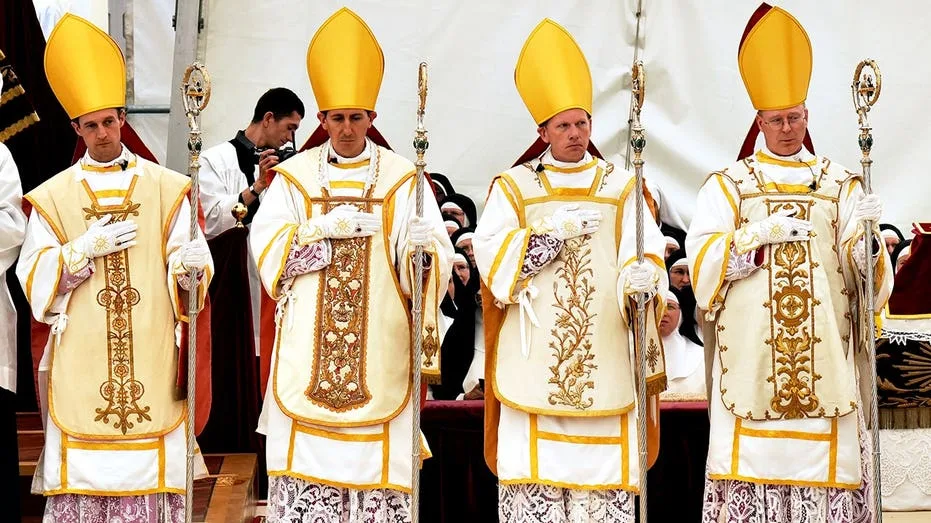
The Vatican announced Thursday the excommunication of bishops from the Society of St. Pius X (SSPX), formally declaring the traditionalist group in schism after they proceeded with the unauthorized ordination of new bishops.
This decisive action by the Holy See came one day after the SSPX consecrated four new bishops at its seminary in Écône, Switzerland. The ordinations occurred despite a personal plea from Pope Leo XIV, who urged the society to abandon what the Catholic Church termed a "schismatic act."
A decree issued Thursday by the Holy See confirmed the excommunication of the four newly consecrated bishops, along with the two bishops who performed the ceremony. The Vatican explicitly stated these ordinations constituted a schism, signifying an intentional separation from the established Catholic Church.
Decades of Doctrinal Disagreement
This latest development follows decades of efforts by several popes to reconcile with the traditionalist movement. The SSPX fundamentally rejects many reforms introduced during the Second Vatican Council in the 1960s, a period that saw significant changes such as allowing the celebration of Mass in vernacular languages rather than exclusively in Latin.
Within Catholic tradition, only the pontiff holds the authority to approve the consecration of bishops. This practice is crucial for maintaining the Church's unity and ensuring the legitimate line of succession tracing back to the apostles.
Sanctions and Papal Intervention
The recent sanctions also reverse certain concessions the Vatican had extended to the SSPX in previous years, aimed at facilitating the group's return to full communion with Rome. Under the new decree, the society is no longer recognized as validly administering the sacraments of confession and marriage. Furthermore, the Vatican has advised Catholics attending SSPX Masses to distance themselves from the movement.
The Vatican's action comes shortly after Pope Leo XIV made a rare direct appeal to the leader of the SSPX, Reverend Davide Pagliarani, urging him to cancel the planned consecrations.
In a letter addressed to Pagliarani on Monday, the pope wrote,
I plead with you and ask you with all my heart: please turn back!He warned that proceeding with the ordinations would only deepen the longstanding division between Rome and the SSPX.
A Test for Pope Leo XIV's Pontificate
This dispute represents the first significant challenge of Pope Leo XIV's papacy. Since assuming the papacy, the American-born pontiff has consistently emphasized the importance of healing divisions within the Catholic Church, including extending outreach to conservative and traditionalist factions who felt marginalized during the tenure of Pope Francis.
During the consecration ceremony on Wednesday, Pagliarani asserted that the ordinations were not performed in opposition to the pope, but rather as a service to the broader Church.
Pagliarani stated,
We are accused of not respecting the pope. But it is precisely because we love the pope as the vicar of Christ, as the head of the church, that we don’t want to see the pope humiliated anymore, on the side of false shepherds representing false religions.
Historical Context of the Society
Established in 1970 by French Archbishop Marcel Lefebvre, the Society of St. Pius X has historically opposed what it perceives as theological errors introduced by the Second Vatican Council. Lefebvre himself faced excommunication in 1988 after consecrating four bishops without the explicit approval of Pope John Paul II, a confrontation almost identical in nature to the current situation.
These earlier excommunications were later lifted in 2009 by Pope Benedict XVI, an initiative intended to re-establish dialogue. Despite this, the SSPX never fully rejoined formal communion with Rome and has continued to operate outside the Church's official structure.
Even with its unofficial status, the society has experienced considerable growth, reporting hundreds of priests, seminarians, and religious members who serve adherents in numerous countries. This makes it one of the largest traditionalist Catholic movements functioning independently of Vatican authority.
Related Stories
U.S. Government Imposes Travel Restrictions on Nogales, Mexico, Citing Unspecified Threat
U.S. government personnel face new travel restrictions in Nogales, Sonora, Mexico, due to an unspecified threat. The U.S. Consulate General issued an alert, advising essential movement during daylight hours and urging
Sep 7
German Far-Right AfD Secures Historic Victory in Saxony-Anhalt State Election
Germany's far-right Alternative for Germany (AfD) party achieved a historic victory in a regional election in Saxony-Anhalt, posing a significant challenge to the established political order and delivering a major
Sep 7
Rome Implements New 'Red Zone' Security Measures Around Colosseum to Combat Rising Crime
Rome has introduced an "enhanced-control zone" around its iconic Colosseum and other historical sites to combat escalating crime and public safety issues. The four-month measure allows authorities to remove individuals
Sep 7
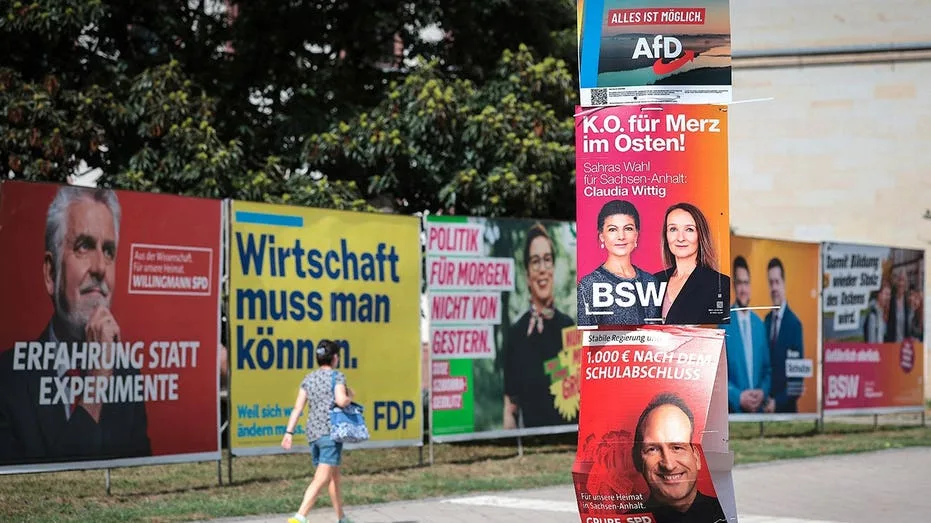
Far-Right AfD Poised for Historic State Election Win in Germany, Challenging Established Political Order
Germany's far-right Alternative for Germany (AfD) party is on the cusp of an unprecedented electoral victory in Saxony-Anhalt, threatening to break traditional political barriers. This potential win highlights growing
Sep 6