United States Men's National Team Maps Ambitious Path to 2026 FIFA World Cup Final
Following a strong group stage performance, the USMNT faces a demanding gauntlet of formidable opponents in their quest for a historic deep run on home soil.
Sports·
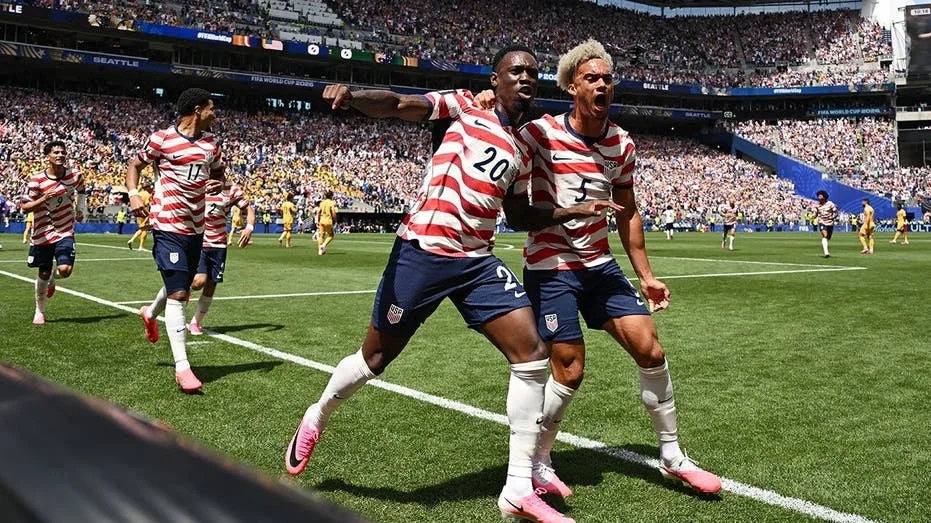
The United States Men's National Team (USMNT) has celebrated a successful group stage campaign, emerging as winners of Group D. Their initial two victories marked a significant achievement, fueling national enthusiasm and aspirations for a deep tournament run, potentially culminating in a historic appearance in the World Cup Final. However, the landscape of their knockout stage journey grew more complex following Belgium's recent triumph, setting the stage for a rigorous challenge ahead.
Navigating the Initial Knockout Rounds
The USMNT will commence its knockout stage endeavors on July 1 in Santa Clara, California. Their first opponent will be Bosnia and Herzegovina, a team that secured a third-place finish in Group B. This initial matchup is considered a favorable start to the win-or-go-home phase of the competition.
The inclusion of third-place teams in the knockout bracket stems from FIFA's expanded 2026 World Cup format, which features 48 participating nations. The knockout stage not only includes the 12 group winners and 12 runners-up but also the eight best third-place finishers. To determine these pairings, FIFA developed a comprehensive chart featuring 495 potential combinations prior to the tournament. This system dictates which third-place teams will face specific group winners based on their originating groups. Following the conclusion of the group stage, Bosnia and Herzegovina was assigned to the United States' position in the bracket, making them the USMNT's opponent in the Round of 32.
Advancing to the Round of 16, the United States is projected to face Belgium on July 6 in Seattle. Belgium, the winner of Group G, entered the tournament ranked ninth globally in the FIFA/Coca-Cola Men's World Ranking. Their specific Round of 32 opponent is yet to be determined, with possibilities including South Korea, Senegal, Algeria, or Austria.
Notably, Belgium previously secured a 5–2 victory over the U.S. in a friendly match in March, adding an extra layer of intrigue to a potential rematch. The bracket's structure was also influenced by Group B tiebreakers, where Belgium and Egypt both finished with five points, but Belgium advanced due to a superior goal differential. While the U.S. might have preferred a matchup against Egypt, Belgium presents a formidable challenge, possessing significant knockout stage capabilities. The American squad will need to deliver a peak performance to progress to the quarterfinals.
A Challenging Quarterfinal Prospect
Should the USMNT replicate its 2002 achievement and reach the quarterfinals, a highly probable adversary awaiting them would be Spain, the winners of Group H, featuring superstar Lamine Yamal. Spain is the only team currently confirmed in that section of the bracket, and they are set to open their knockout campaign on July 2 against the runner-up of Group J, which will be either Algeria or Austria.
Further complicating the quarterfinal path, the Round of 32 matchups in Groups K and L could introduce additional strong contenders. The most likely runners-up from these groups are Colombia or Portugal from Group K, and Croatia or Ghana from Group L, contingent on the final group stage outcomes, with England's final match on Saturday potentially influencing the standings. Consequently, the route to the quarterfinals appears exceptionally demanding for the United States. If the team reaches this stage, a match on July 10 in Los Angeles could realistically pit them against Spain, Colombia, or Portugal—any of whom would represent the most rigorous test of their tournament journey.
In essence, if the U.S. advances to the final eight, they will almost certainly confront a European or South American football powerhouse, particularly Spain or Portugal. Achieving this stage alone would be a remarkable accomplishment, but the team's ambitions extend beyond mere participation.
The Road to the Semifinals
The USMNT has only reached the semifinals of a World Cup once before, during the inaugural tournament in 1930, when only 13 teams competed. Although the format was vastly different then, that run remains the deepest in U.S. men’s World Cup history. In the expanded 2026 format, reaching the semifinals would necessitate winning three consecutive knockout matches, a feat that would likely involve overcoming multiple elite national teams.
If the U.S. were to make it this far, the semifinal match would be played on July 14 at AT&T Stadium (officially designated "Dallas Stadium" by FIFA for the tournament) in Arlington. Potential opponents from the other side of the bracket include some of the strongest teams in international football, such as France and Germany, who collectively boast six World Cup titles. Other possible challengers include the Netherlands, a three-time World Cup runner-up that eliminated the U.S. in 2022, along with Paraguay, Sweden, Morocco, and Canada.
A semifinal run would undeniably require the U.S. to defeat at least one, if not several, global football giants, making it arguably the most challenging and historically significant stretch in the program's history. Such an achievement would be considered an extraordinary feat.
The Ultimate Goal: A Home World Cup Final
Should the USMNT advance to the World Cup Final, the culminating match would take place on July 19 at MetLife Stadium, which FIFA has renamed "New York New Jersey Stadium" for the event. This would undoubtedly mark the most momentous occasion in the history of American soccer, particularly as a home final played before a fervent national audience and under a global spotlight.
However, the path on the opposing side of the bracket is equally formidable, featuring numerous traditional football powers. Brazil (five-time champions), Argentina (three-time winners and reigning champions), and Mexico are already confirmed in that half of the draw. England and Portugal could also join them, depending on the final group-stage results. Therefore, a potential U.S. appearance in the final would almost certainly involve facing one of the sport’s most historic giants, making the entire knockout route one of the most arduous in World Cup history.
The journey ahead for the USMNT is one of immense challenge and historic opportunity, demanding exceptional performances at every turn.
Related Stories

Clemson Tigers' Era Under Dabo Swinney Faces Critical Crossroads After Recent Struggles
Clemson's football program, under Dabo Swinney, faces increasing scrutiny after a dominant defeat and recurring slow starts. Many suggest a change is due, citing declining recruiting and resistance to the transfer
Sep 7

Bronson Reed's Powerful Return Reshapes WWE's Future Narrative
Bronson Reed returned to the ring at Sunday Night's Main Event following a bicep injury, appearing leaner and more intense. His unexpected intervention in a high-stakes match between Bron Breakker and Oba Femi
Sep 7

Trick Williams Captures United States Championship at Sunday Night's Main Event After Lil Yachty's Crucial Bout
Trick Williams won the United States Championship for the second time at Sunday Night's Main Event. His victory against Baron Corbin hinged on manager Lil Yachty surviving a five-minute challenge, which he did, paving
Sep 7
MLB Admonishes Umpire Doug Eddings Over Controversial Hat Incident with Cardinals Pitcher
Major League Baseball has reportedly addressed umpire Doug Eddings' controversial instruction to St. Louis Cardinals rookie pitcher Hancel Rincon regarding his cap. The incident, which led to manager Oli Marmol's
Sep 7