United States Congratulates Keiko Fujimori Following Narrow Peruvian Presidential Victory
Washington signals intent to deepen collaboration with Peru's president-elect after a closely contested election result.
World·
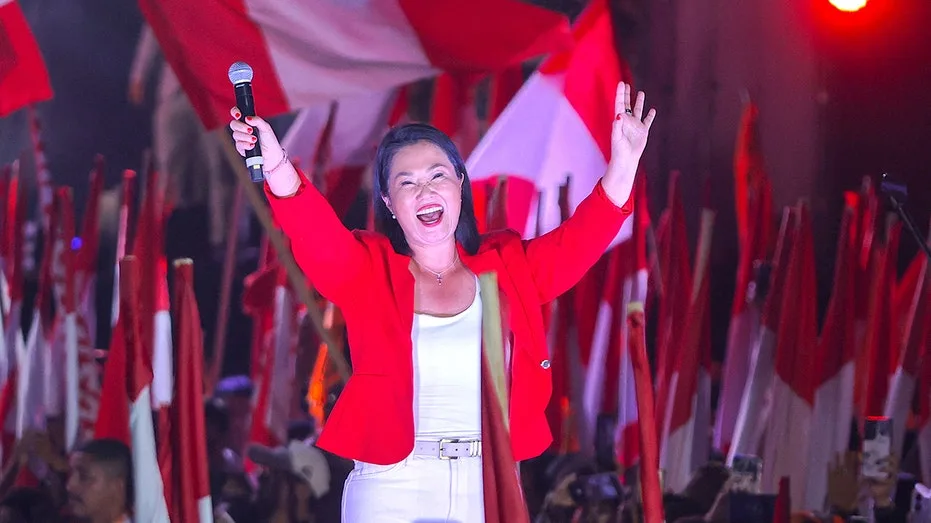
The United States State Department extended its congratulations to conservative candidate Keiko Fujimori on Tuesday, recognizing her as Peru’s president-elect following an extremely close runoff election.
This declaration marks a pivotal development in diplomatic ties across Latin America, indicating Washington's eagerness to collaborate closely with Fujimori's incoming administration on various mutual priorities.
"The United States congratulates President-Elect Keiko Fujimori of Peru on her important electoral victory," the department stated.
"The Trump Administration looks forward to deepening collaboration with the Fujimori Administration to advance security cooperation and to strengthen bilateral cooperation on investment and trade in our region."
Fujimori's triumph comes as the U.S. actively seeks to reinforce alliances with pro-market nations in Latin America, particularly amidst the growing economic footprint of China in the region. For instance, Beijing recently finished the construction of the Chancay deepwater port in Peru, a significant $1.3 billion infrastructure project that serves as a vital Chinese logistics hub on the Pacific coast.
Furthermore, Fujimori's firm stance against organized crime aligns with broader U.S. initiatives aimed at enhancing regional security and cooperation in anti-trafficking efforts.
Election Results and Official Declaration
Keiko Fujimori was announced as the victor on Monday by Peru’s National Office of Electoral Processes (ONPE), the body responsible for tabulating and reporting vote counts. However, the National Jury of Elections (JNE), which is the nation's ultimate electoral authority, has yet to issue its final official proclamation, according to reports.
According to figures from the ONPE, Fujimori secured 50.1% of the total votes, winning by a margin of fewer than 50,000 ballots out of approximately 18 million cast. Her victory over her leftist challenger, Roberto Sánchez, represents her fourth attempt at the presidency and makes her the first woman to be named president-elect in Peru's history.
This outcome concludes a deeply polarizing election period in a country that has experienced considerable political upheaval, with nine different presidents serving over the last decade.
The Fujimori Legacy and Political Platform
Keiko Fujimori is the daughter of former Peruvian President Alberto Fujimori, who governed the nation throughout the 1990s. Her impending presidency signifies the return of her family's political brand to Peru's highest office, a movement that has historically maintained a complex relationship with the United States.
During the 1990s, Washington initially supported her father for his campaign against communist guerrillas and his economic reforms. However, the U.S. later condemned his government due to the dismantling of democratic institutions and accusations of human rights abuses.
For more than two decades, Keiko Fujimori has dedicated herself to reorienting "Fujimorismo" into a contemporary conservative, law-and-order political movement.
Peruvian voters largely favored Fujimori amid a notable increase in violent crime, widespread extortion, and several years of political instability. Her campaign focused on a "tough on crime" approach to security and a commitment to safeguarding Peru’s free-market economy, contrasting with her opponent, who primarily addressed rural economic concerns.
Related Stories

U.S. Government Imposes Travel Restrictions on Nogales, Mexico, Citing Unspecified Threat
U.S. government personnel face new travel restrictions in Nogales, Sonora, Mexico, due to an unspecified threat. The U.S. Consulate General issued an alert, advising essential movement during daylight hours and urging
Sep 7
German Far-Right AfD Secures Historic Victory in Saxony-Anhalt State Election
Germany's far-right Alternative for Germany (AfD) party achieved a historic victory in a regional election in Saxony-Anhalt, posing a significant challenge to the established political order and delivering a major
Sep 7

Rome Implements New 'Red Zone' Security Measures Around Colosseum to Combat Rising Crime
Rome has introduced an "enhanced-control zone" around its iconic Colosseum and other historical sites to combat escalating crime and public safety issues. The four-month measure allows authorities to remove individuals
Sep 7

Far-Right AfD Poised for Historic State Election Win in Germany, Challenging Established Political Order
Germany's far-right Alternative for Germany (AfD) party is on the cusp of an unprecedented electoral victory in Saxony-Anhalt, threatening to break traditional political barriers. This potential win highlights growing
Sep 6