Troy Jackson Poised to Secure Democratic Senate Nomination in Maine Following Rivals' Withdrawal
Former Maine Senate President Troy Jackson has solidified his position to become the Democratic nominee for the U.S. Senate after winning a vast majority of delegates and seeing his primary opponents exit the race.
Politics·
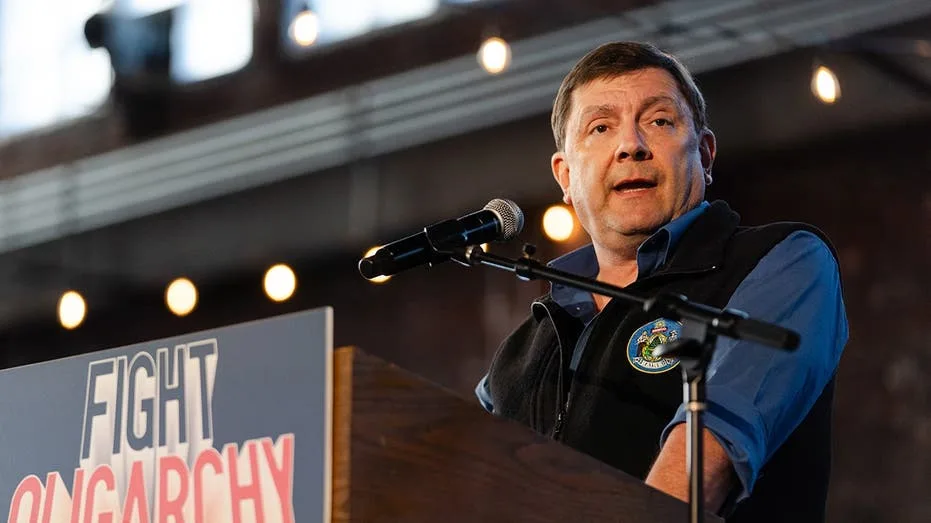
Former Maine Senate President Troy Jackson is in a commanding position to secure the Democratic nomination for the U.S. Senate, setting the stage for a high-stakes general election contest against long-serving Republican Senator Susan Collins. Jackson's rapid ascent follows a weekend of significant delegate victories and the withdrawal of his main competitors.
Delegates aligned with Jackson claimed the overwhelming majority of the 500 available slots during two days of county-level selections across Maine's 16 counties. This crucial process preceded next weekend's nominating convention. Adding to Jackson's momentum, Maine Secretary of State Shenna Bellows and Dr. Nirav Shah, a prominent former public health official, both announced their departure from the race on Sunday.
"In November, Mainers will defeat Susan Collins, and we will take back our Senate seat from the billionaires and corporations who think they own it," Jackson declared in a social media message Sunday evening.
While the delegates chosen are not formally bound to support Jackson at the upcoming convention, his dominant performance places him in an exceptionally strong position to officially become the nominee. He will then face Senator Collins in what is anticipated to be a fiercely contested and expensive election. This race is considered one of about a dozen nationwide that will determine whether Democrats can regain control of the Senate, which currently holds a 53-47 Republican majority.
Jackson's Background and Delegate Dominance
A fifth-generation logger, Jackson previously served as a conservative Republican before transitioning to the Democratic Party over two decades ago. He finished third in Maine's Democratic gubernatorial primary last month.
On Saturday, Jackson-aligned delegates achieved significant victories, securing over 90% of the available slots, including all 149 in Cumberland County, Maine's most populous county and home to its largest city, Portland.
"Yesterday was an unbelievable huge step, but our work is not finished — not even close," Jackson stated Sunday morning, as his delegates' winning streak continued throughout the day.
Ultimately, more than 470 of the 500 delegates elected over the weekend were part of Jackson's slate. These elected delegates will join an additional 101 automatic delegates from the Democratic State Committee, bringing the total to 601 who will vote for the Senate nominee at next Saturday's convention in Bangor, Maine.
Rivals Withdraw and Endorsements
Shenna Bellows, who also previously sought the Democratic gubernatorial nomination, announced her exit from the Senate contest on Sunday morning.
"Donald Trump’s attacks on our democracy are only accelerating, and the best way that I can serve our state and country at this moment is by focusing exclusively on my role as Secretary of State," Bellows explained in a statement that notably did not mention Jackson.
Dr. Nirav Shah, who served as director of the Maine Center for Disease Control and Prevention from 2019 to 2023 and later as principal deputy director of the federal CDC during the Biden administration, and who placed second in last month's Democratic gubernatorial primary, withdrew Sunday evening. He subsequently endorsed Jackson.
"To Maine Democrats: Susan Collins will not be defeated without a united Democratic Party. And we cannot unite without treating one another with respect," Shah wrote in his statement. "No matter whom you supported in this race, I urge us all to remember that in the weeks ahead."
In response, Jackson thanked Shah in a social media post, urging, "Now it's time for all of us to come together, build the broadest possible coalition, and defeat Susan Collins. Let's get to work."
Other candidates also ended their campaigns on Sunday. Jordan Wood, a former congressional staffer who had unsuccessfully run for the Senate and the Democratic nomination in the state's 2nd Congressional District this cycle, withdrew. Maine Beer Company co-founder Dan Kleban also announced a suspension of his campaign.
Continuing the Progressive Agenda
Jackson has garnered support from progressive figures, including Senator Bernie Sanders of Vermont, who had also backed former candidate Graham Platner in his gubernatorial bid. Jackson is currently supported by 'Our Revolution,' an organization that emerged from Sanders' 2016 presidential campaign.
Mirroring Platner's approach, Jackson is campaigning on a progressive and populist platform designed to appeal to working-class voters. His policy positions include advocating for higher taxes on billionaires, a universal healthcare system (often referred to as "Medicare-for-all"), the abolition of U.S. Immigration and Customs Enforcement (ICE), and opposition to military aid to Israel, a stance that highlights growing divisions within the Democratic Party regarding support for the long-standing Middle East ally.
The current race emerged after Graham Platner, a combat veteran and oyster farmer, withdrew from the contest. Platner, who received Sanders' endorsement shortly after launching his campaign last August, initially saw his bid gain rapid traction. Two-term Democratic Governor Janet Mills, who was reportedly encouraged by Democratic Senate leader Senator Chuck Schumer to run for Senate, suspended her campaign earlier this spring after trailing Platner in both fundraising and polling.
Despite his initial success and securing the nomination last month, Platner's campaign faced numerous controversies. He ultimately withdrew earlier this month amidst calls from prominent Democrats in Maine and nationally, following a report detailing an allegation of rape from a former partner. Platner denied the allegation but stepped aside from the race.
Jackson was among those who swiftly called for Platner to end his campaign after the rape allegation surfaced. However, he had previously campaigned alongside Platner, asserting that he was the most suitable candidate to continue advocating for their shared progressive and populist agenda.
"This movement has always been bigger than one person. It's about taking on a system rigged against working people, fighting for ‘Medicare-for-all,’ strong unions, higher wages, reproductive freedom, and an economy where billionaires and corporations finally pay their fair share," Jackson emphasized last week during an Our Revolution virtual town hall, addressing Platner's supporters.
During the first debate among the replacement candidates last week, Jackson specifically referenced Platner, stating, "That's the thing that I think Graham did the best: talked about fighting against the health care industry and the prescription drug industry to make sure that people in this state and this country have affordable, quality health care."
Related Stories

Former President Trump's Apparent Hair Color Change Ignites Online Discussion
Former President Donald Trump's hair appeared noticeably darker on Friday, sparking extensive online discussion. Photos showed him arriving in New Jersey with a brunette-like hue, leading to numerous social media
Sep 6
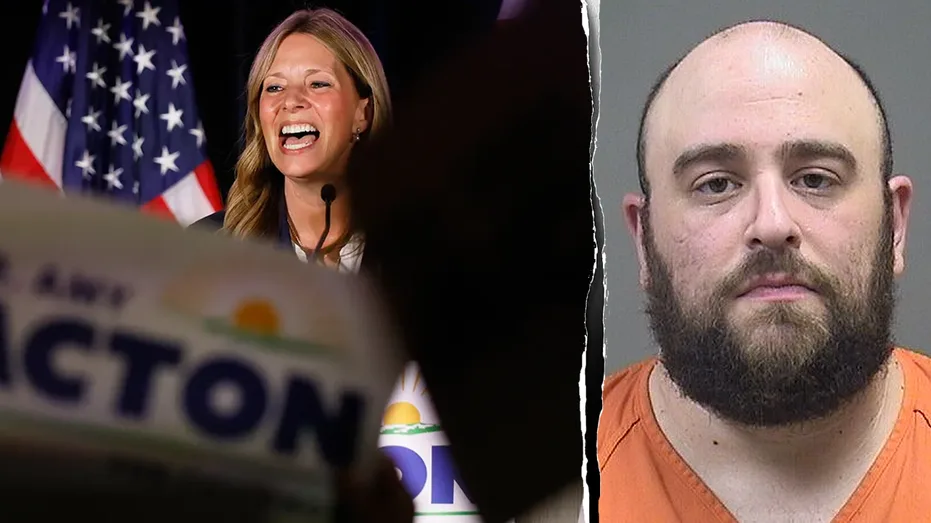
Armed Man Detained After Forcibly Approaching Ohio Gubernatorial Candidate Amy Acton at Fair
A man carrying a taser and two pistols was arrested at the Canfield Fair after allegedly assaulting multiple attendees while attempting to confront Ohio gubernatorial candidate Amy Acton. Acton was unharmed in the
Sep 6

Hasan Piker Defies Democratic Critics, Names Alexandria Ocasio-Cortez His 2028 Presidential Choice
Hasan Piker, a prominent progressive streamer, has rebuffed Democratic Party criticisms of his polarizing comments. He asserts his independence from party image, clarifies past statements, and announces his support for
Sep 6
House Democrats Prepare Extensive Investigations Into Trump Administration if They Secure Majority
House Democrats are poised to launch a series of investigations into former President Donald Trump, his family, and administration officials if they win a majority in the upcoming midterm elections. Key figures like
Sep 6