Supreme Court Affirms State Authority to Reserve Women's Sports for Biological Females
A recent Supreme Court decision upheld state laws that designate women's sports for biological females, marking a significant development for Title IX protections.
Opinion·
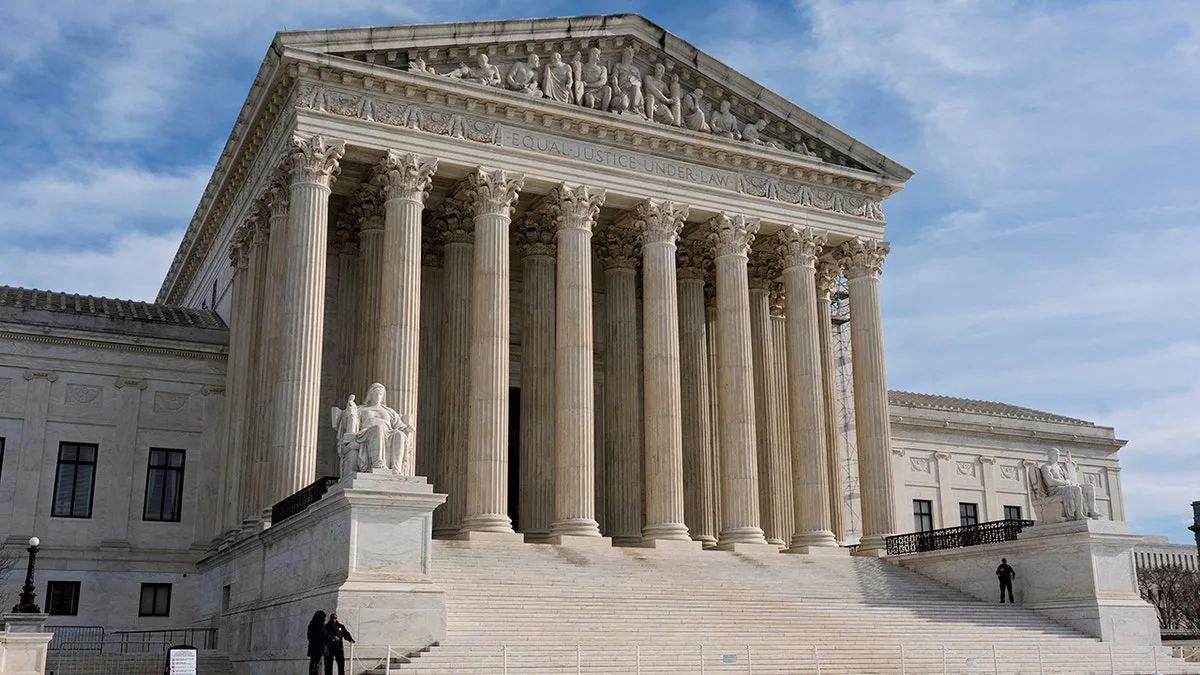
The Supreme Court recently issued a significant ruling, affirming states' authority to reserve women's sports for biological females. This decision, which consolidated two landmark cases from Idaho and West Virginia, has been hailed by some as a crucial victory for women's athletics and the interpretation of federal law.
The Court determined that state statutes designating girls' and women's sports for biological females do not infringe upon Title IX or the Equal Protection Clause of the Fourteenth Amendment. This interpretation clarifies that the term "sex" within these contexts refers to biological sex, rather than an individual's subjective gender identity.
Observers note that this ruling reinforces a position that was widely accepted until recently. It arrives shortly after the 54th anniversary of Title IX, the civil rights legislation enacted to ensure equal opportunities for female athletes, suggesting the Court's decision aims to safeguard the very category Title IX was established to protect.
Despite the majority ruling, the Court's decision was not unanimous. A 6-3 split occurred on the question of whether such state laws violate the Equal Protection Clause of the 14th Amendment. The three dissenting justices, all women appointed by Democratic presidents, contended that laws preserving women's sports for biological females constitute unlawful discrimination.
The majority opinion concluded that states are permitted to reserve women's sports for biological women because the sexes are not deemed "similarly situated" in athletic competition. This acknowledges fundamental biological distinctions between men and women and their relevance in sports, a point often emphasized by advocates for single-sex categories.
For centuries, the definitions of terms such as "man," "woman," "male," "female," and "sex" were largely understood without contention in the United States. However, in recent years, a cultural shift has led to public institutions, corporations, universities, and even judicial bodies engaging in debates over what some consider objective reality.
This evolving discourse notably led to a sitting Supreme Court justice stating an inability to define "woman," citing a lack of biological expertise. Proponents of traditional definitions view the recent ruling as a return to common sense, yet they stress the importance of understanding the precise scope and limitations of the decision.
Understanding the Ruling's Implications
Despite the celebratory response from some, the recent Supreme Court decision is viewed by advocates for women's sports as a partial, rather than definitive, victory. While the ruling affirms that creating a sports category exclusively for biological women is not unconstitutional, it does not mandate such exclusivity across all states.
This distinction, emphasizing "may" rather than "must," is critical. Prior to 2020, such a clarification would not have been considered a significant advancement, as the standard practice was to have sex-segregated sports. The ruling permits states to enact or maintain laws reserving women's sports for biological females, but it does not compel them to do so.
Consequently, the decision does not directly impact the 23 states that currently lack legislation prohibiting biological males from competing in women's sports. This leaves the standard of fairness and safety in girls' and women's athletics dependent on geographical location.
The Path Forward for Protecting Women's Sports
Advocates suggest that the issue of protecting women's sports gained significant national attention due to former President Donald Trump, who campaigned on the topic, issued an executive order during his term, and has continued to discuss it publicly.
However, executive orders are temporary and can be reversed by subsequent administrations. Therefore, a push for congressional action is seen as essential. The "Protection of Women and Girls in Sports Act" previously passed the House of Representatives but has since stalled in the Senate. Proponents argue that if legislators are committed to ensuring equal opportunity, fairness, and safety for women, these protections should be codified into federal law, rather than remaining subject to shifting presidential policies.
Beyond federal legislation, there is a call for states to implement their own laws or ballot measures, establish robust enforcement mechanisms, and foster a cultural environment that supports these protections. Despite the recent Supreme Court ruling, many believe the broader effort to safeguard women's sports is far from over.
Addressing Continued Opposition and Enforcement Challenges
Concerns remain regarding states that may choose to continue policies allowing biological males to compete in women's sports, despite the Supreme Court's affirmation of state authority to do otherwise. Critics of such policies argue that they prioritize certain ideological viewpoints over the physical safety and fair competition of girls and women.
There is an expectation that federal agencies, such as the Department of Justice and the Department of Education, will rigorously enforce existing federal laws against institutions that may be seen as infringing upon the rights of women and girls. However, it is also acknowledged that legal challenges can be protracted, with some states potentially seeking injunctions and other delaying tactics.
Beyond legal and governmental actions, accountability is also expected to emerge from broader societal pressures. Historical precedents suggest that institutions often alter their practices when the financial or reputational costs of ignoring prevailing realities become too high. Various stakeholders, including parents, athletes, donors, consumers, and voters, possess significant influence.
Universities, athletic associations, corporations, and governing bodies are urged to recognize that sacrificing women's rights in favor of political ideologies can lead to tangible consequences. Furthermore, individual athletes are encouraged to continue advocating for their rights. Litigation against schools or athletic organizations that violate the rights of female athletes is seen as a viable option, as each successful lawsuit can increase the cost of discrimination and make it more difficult for institutions to dismiss the issue.
The sentiment is that those who knowingly and willingly compromise the safety and fairness for girls in sports for ideological reasons should face significant repercussions. Such actions, intended by some as defiance against certain political figures or policies, are ultimately seen as detrimental to the girls and women within those states.
The Enduring Political Debate
Commentators anticipate that the issue of transgender participation in sports will remain a prominent topic in upcoming election cycles, including 2026 and 2028. Some political observers suggest that this issue has become a defining stance for the Democratic party.
One perspective notes that during a previous election cycle, the Republican party saw significant gains, which some attributed to what they perceived as the Democratic party's increasingly radical positions on cultural issues. Contrary to expectations that the Democratic party might moderate its stances, some believe they have become even more entrenched in their positions, not only on gender ideology but also on other cultural matters, citing examples of candidates expressing views on gender and religion.
Proponents of biological sex-based sports argue that as long as the relevance of biological sex in sports is contested, Republican candidates should continue to press the issue. They advocate for a direct question to all public office seekers: "Should girls compete against boys?"
It is argued that any response other than an unequivocal "no," or an attempt to deflect or avoid the question, should be considered disqualifying by "commonsense" voters. The ability to affirm that men cannot become women is presented as a fundamental indicator of a candidate's grasp of reality, impacting their credibility on other policy issues.
The Broader Stakes Beyond Sports
The recent Supreme Court ruling is seen not as a conclusion, but rather as a new beginning in the ongoing effort to define and protect women's rights. Advocates believe the decision re-establishes meaning for Title IX, and the next phase involves ensuring its significance is recognized and implemented consistently across all states, particularly for women and girls.
The underlying issue in these sports cases is considered to be much broader than athletics alone. Sports have served as a public forum for a long-standing national debate: whether biological sex retains its legal significance. The Court's decision, by affirming the relevance of biological sex, is viewed as a substantial win.
However, the work is considered incomplete until uniform protections are in place for every girl in every state. For many, this is not merely an abstract legal discussion but a deeply personal concern, often framed in terms of ensuring future generations of women have fair opportunities.
The aspiration is for young women to achieve athletic success based on competition against other biological women, free from concerns about redefined categories. The goal is for terms like "equal opportunity" to hold concrete meaning, and for future generations to live in a society where acknowledging biological reality does not require exceptional courage.
The Supreme Court's action is seen as an important stride toward restoring this reality, but the responsibility to fully achieve these goals now rests with legislators, institutions, and the public.
Related Stories

Bipartisan Push in Congress Seeks to Safeguard AM Radio's Role in Community Discourse and Emergency Preparedness
Congress is poised to pass the AM Radio For Every Vehicle Act, a bipartisan bill ensuring new cars include AM receivers. Proponents argue it's crucial for emergency broadcasts and preserving local community dialogue,
Sep 6

Supreme Court's White House Ballroom Ruling Underscores Debate Over Judicial Appointments
The Supreme Court recently ended a legal challenge to a White House ballroom project, prompting renewed debate on judicial interpretations of standing and the broader need for federal judges who adhere strictly to
Sep 6

Artificial Intelligence: Learning from Social Media's Mistakes to Protect a Generation
The rapid advance of artificial intelligence presents a profound ethical dilemma. Learning from social media's past harms to children, proactive measures are urged to protect a new generation from AI's potential
Sep 5
Democratic Socialists and Hasan Piker Mark a Defining Summer for American Politics
This summer is increasingly defined by the growing presence of the Democratic Socialists of America (DSA) in electoral politics and the controversial rise of streamer Hasan Piker, whose radical views and rhetoric are
Sep 1