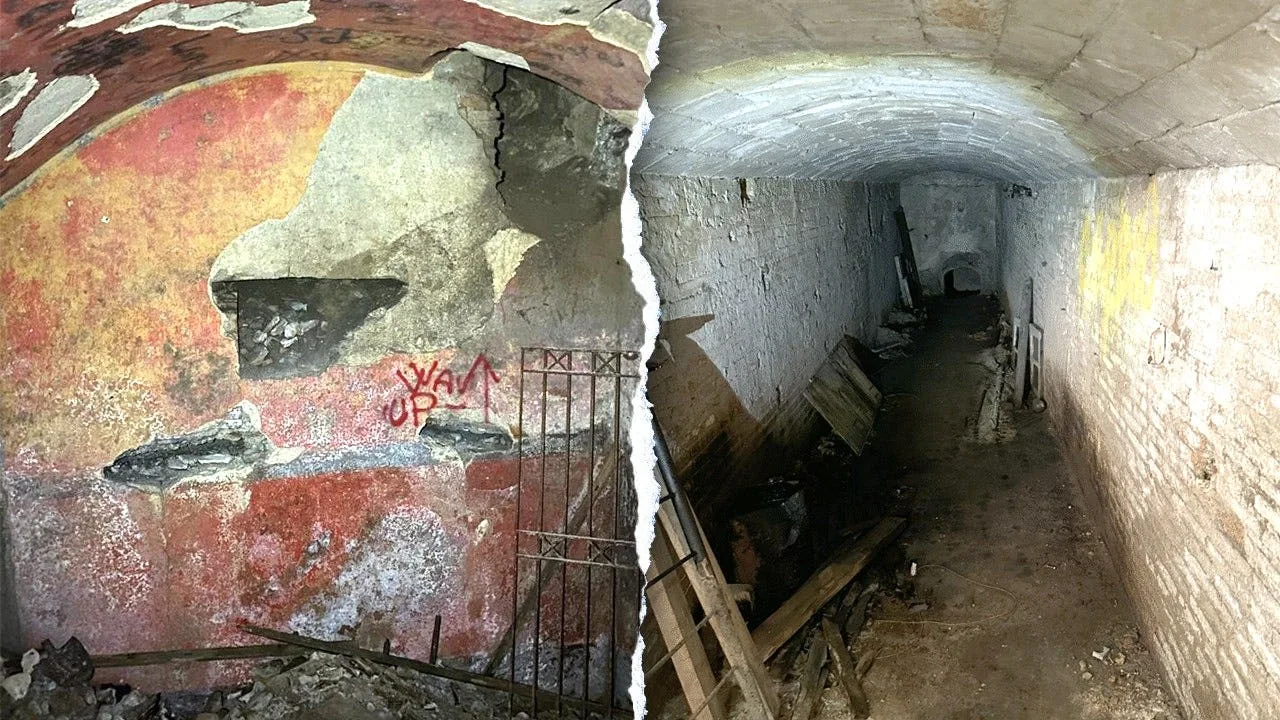
Italian authorities recently announced the discovery of an ancient Roman villa situated beneath a high school gymnasium, a significant revelation credited in part to students who brought attention to the long-whispered-about site.
This upscale Roman residence, known as a domus, was located under Cavour High School, positioned just a short distance from Rome's iconic Colosseum.
Archaeologists publicly presented their findings and the results of their excavation earlier in June, sharing the details with educators and pupils at Cavour High School.
Discovery and Initial Findings
In a statement released by the school, Cavour High School indicated that the domus was uncovered “by chance” beneath its gymnasium, although specific details regarding the circumstances of the find were not provided by officials.
“Over the years, after becoming aware of these findings, school staff informed Rome’s Special Superintendency about the accidental discoveries,” the translated statement explained. “Following the planning of an intervention, work began in January 2026 to remove more recent fill material, paving the way for the archaeological excavation of the site.”
Images from the site, made public by officials, showcase vaulted chambers adorned with faded frescoes and intricate decorative plasterwork. The photographs also reveal some modern graffiti and accumulations of rubble.
A Teacher's Persistence
Claudia Marino, a history and Latin instructor at Cavour High School, recounted to The Times of London that she initially dismissed local legends about ancient ruins hidden beneath the school grounds.
“Ten years ago, a student told me the story, but I didn’t give it much thought,” Marino shared with the publication.
It wasn't until several years later, following a student protest at the school, that Marino began to reconsider the validity of these persistent rumors.
“When it was over, a group of students told me, ‘There really is something under the school,’” she recalled. She noted the students' familiarity with ancient sites, stating, “We take our pupils to have outdoor lessons on the Palatine Hill, so they know [what] they are talking about.”
Marino eventually ventured into the school’s basement alongside her colleagues and, using a key, unlocked an old iron door, revealing the long-rumored ruins.
“Beyond that were ancient Roman walls, a space we squeezed through — and we were in the villa,” she told The Times of London.
The villa contained graffiti dating back to 1940 and 1950, suggesting that the site had been accessed decades prior to the recent archaeological excavation.
Future Plans and Broader Context
Officials have expressed intentions to eventually open the newly discovered villa to the public, with students from Cavour High School slated to serve as guides.
This domus represents one of several Roman structures that have been either discovered or rediscovered in recent times.
Last summer, archaeologists involved in Rome’s Metro Line C expansion project unearthed a multi-story apartment complex dating back to the first century B.C.
Earlier in the same season, an ancient Roman building was found at a highway construction site in Switzerland, a discovery made with the assistance of a pedestrian.