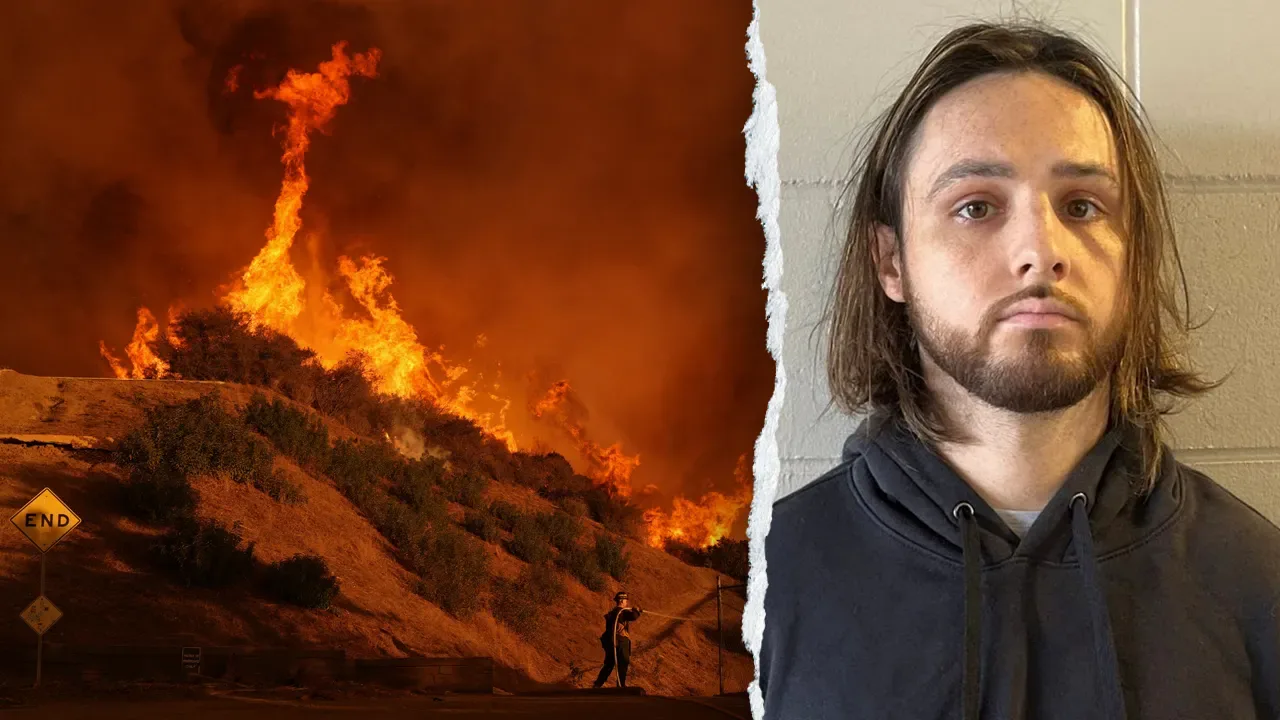
A federal judge has declared a mistrial in the case of Jonathan Rinderknecht, the man accused of deliberately igniting the Palisades Fire, after jurors were unable to reach a unanimous verdict. The jury's decision came after ten of the California jurors indicated they believed Rinderknecht was not guilty, while two believed he was.
Rinderknecht, who was arrested in October 2025 and formally charged in January 2025, had pleaded not guilty to allegations of property destruction by means of fire in connection with the incident.
Prosecutors Vow to Retry Case
United States Attorney Bill Essayli expressed strong confidence in the prosecution's position following the mistrial. In a public statement, Essayli affirmed his belief in Rinderknecht's culpability, stating,
The evidence is strong that Jonathan Rinderknecht is responsible for igniting the fire on January 1, 2025, which eventually became the Palisades fire. We fully intend to retry this case before a new jury and obtain guilty verdicts on all charged counts.
The announcement of the mistrial followed a period of uncertainty in the jury's deliberations. On Thursday afternoon, jurors initially communicated they had reached a verdict, only to retract this statement approximately 30 minutes later, indicating they had no unanimous decision. The presiding judge inquired whether further instruction or the re-reading of testimony could aid their process, to which the jury responded,
There is nothing the court can do to assist the jury in their deliberations. Additional instructions or rereading the testimony would not help in deliberations. Unfortunately, we cannot reach a unanimous verdict.
Devastating Impact of the Palisades Fire
The Palisades Fire, which Rinderknecht is accused of starting, resulted in immense destruction and loss of life. Estimates place the total damage caused by the blaze between $35 billion and $45 billion. Tragically, the fire also led to the deaths of 12 individuals.
Behavioral Analysis and Alleged Motivations
During the trial, behavioral analyst Kevin Kelm provided expert testimony, suggesting that Rinderknecht's actions exhibited patterns consistent with someone driven by what he termed "societal revenge."
Kelm elaborated that individuals motivated by societal revenge typically fixate on personal struggles such as financial difficulties, relationship issues, employment problems, or general lifestyle dissatisfaction that they find themselves unable to manage daily. In Rinderknecht's specific case, Kelm highlighted the defendant's alleged use of ChatGPT to generate a "dystopian image" of the world. This image, according to Kelm, was designed to represent a clear divide between wealthy individuals and those with less financial means.
Alleged Fixation on Luigi Mangione
Prosecutors presented arguments suggesting that Rinderknecht drew inspiration from Luigi Mangione, who stands accused of the murder of UnitedHealthcare CEO Brian Thompson. Court filings by prosecutors detailed Rinderknecht's escalating anger with his personal circumstances and society at large in the period leading up to the fire.
In the months leading up to the fire, he had become increasingly angry with his life and society at large. For example, in the weeks and hours leading up to the fire, defendant fixated on Luigi Mangione, who allegedly murdered the UnitedHealthcare CEO in New York City on December 4, 2024.
Federal prosecutors further revealed that on December 12 and 13, 2024, Rinderknecht conducted internet searches using phrases such as "free LuigiMangione," "lets take down all the billionaires," and "reddit lets kill all the billionaires."
When investigators questioned Rinderknecht about potential motivations for arson in the Pacific Palisades area, he reportedly articulated his perspective. Prosecutors noted that he responded by citing resentment towards the wealthy, expressing that they enjoy their money while "we’re basically being enslaved by them." He allegedly likened such an act of "desperation" to the murder for which Mangione was charged.