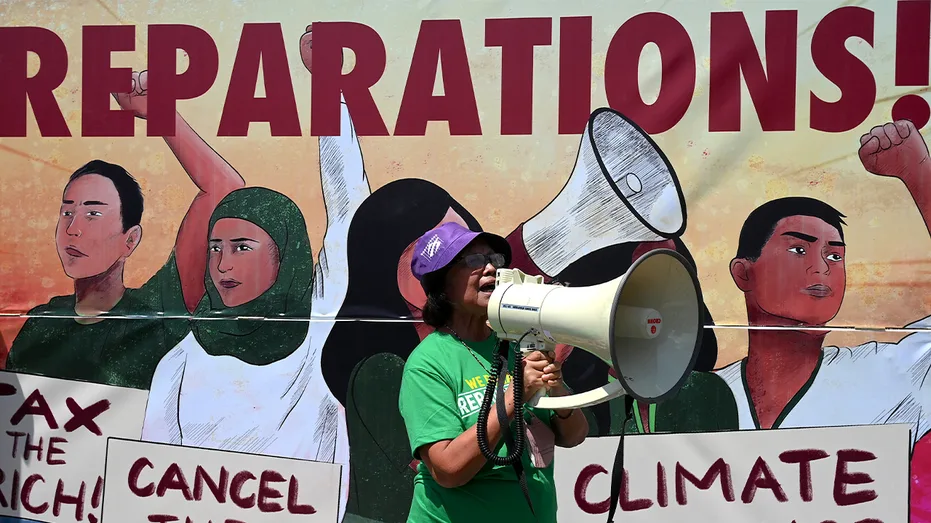
A prominent civil rights organization, the New York Civil Liberties Union (NYCLU), is advocating for the state to implement reparations, arguing that Black New Yorkers are owed a historical debt. This debt, they assert, stems from deep wealth disparities directly linked to New York's historical involvement in slavery and decades of codified systemic discrimination.
"Reparations are a debt that is owed. Enslaved Black people built the foundation of New York’s economy, but Black families in our state still face racism that has been codified into our laws and budgets," said Lanessa Owens-Chaplin, Director of the Racial Justice Center at the New York Civil Liberties Union (NYCLU). "New York State was not a bystander to slavery — it created, enacted, and protected the institution. Reparations must be extended to all Black New Yorkers descended from those enslaved by New York State, and to all Black New Yorkers still living under the systems slavery built."
Deep-Rooted Disparities Detailed in Report
Last week, the NYCLU collaborated with the Legal Defense Fund (LDF) to release a comprehensive report titled "The Other New York: The Legacy of Slavery and the Case for Reparations Now." This document thoroughly examines the enduring economic consequences of slavery and Jim Crow-era policies on Black communities throughout the state.
According to the report's findings, the median wealth for Black New Yorkers is $18,870. This figure is starkly contrasted with the median wealth of White New Yorkers, which stands at $276,900, revealing a nearly fifteen-fold difference. The organizations emphasized that New York state exhibits a racial wealth gap that is wider than the national average.
The report identifies government-sanctioned practices, such as redlining, as primary contributors to the current wealth inequality. It highlights how the exclusion and displacement of Black communities deprived them of "the stability and generational wealth that homeownership provides."
"Nearly 90 years after redlining and urban renewal, formerly redlined communities remain some of the highest-poverty neighborhoods in New York," the report states. "Zoning laws reinforced the racial hierarchy established under slavery, forcing Black people to live in industrial areas with increased pollution — leading to disproportionately high asthma, cardiovascular disease, premature delivery, and premature death. Schools serving predominantly Black students have been severely underfunded and disproportionately affected by environmental hazards, crumbling infrastructure, and lead poisoning."
Beyond Compensation: Proposed Remedies
The groups contend that reparations must extend beyond mere symbolic gestures. They advocate for a two-pronged approach: direct financial compensation for documented losses and extensive institutional policy reforms.
As the authors articulated in the report, "Supporting reparations is about more than compensation; it is about acknowledging harm, restoring dignity, and creating pathways for communities to thrive." The report outlines suggested remedies designed to "compensate for the harm by addressing tangible losses, such as loss of wealth, wages, and other damages caused by wrongdoing," while simultaneously advocating for broader structural changes in areas like criminal justice, environmental policy, and public school funding.
The report concluded with a strong appeal: "In order to build a thriving economy and a resilient multi-racial democracy, New York must repair past harm and break down barriers to opportunity for Black communities. Reparations benefit all New Yorkers."
National Scrutiny and State-Level Delays
These state-level efforts are unfolding as racial redress initiatives at both state and municipal levels nationwide encounter increasing legal and political scrutiny. In Evanston, Illinois, which was the first U.S. municipality to distribute cash and housing grants as part of its reparations program, the initiative is currently facing a high-profile federal lawsuit. The U.S. Department of Justice intervened in this legal challenge, asserting that race-based benefit distributions violate the Equal Protection Clause of the Fourteenth Amendment.
Meanwhile, within New York, the advancement of state-level recommendations has encountered delays.
The New York State Community Commission on Reparations Remedies was established through legislation signed by Democratic Governor Kathy Hochul in late 2023. This panel was tasked with investigating the state's historical connections to slavery, subsequent Jim Crow practices, and contemporary economic disparities, with the goal of formulating recommendations for policy adjustments and financial remedies.
However, the NYCLU voiced strong criticism of state officials after a provision, quietly inserted into the state budget, postponed the commission’s final report deadline by two years, shifting it from its initial target of 2025 to 2029.