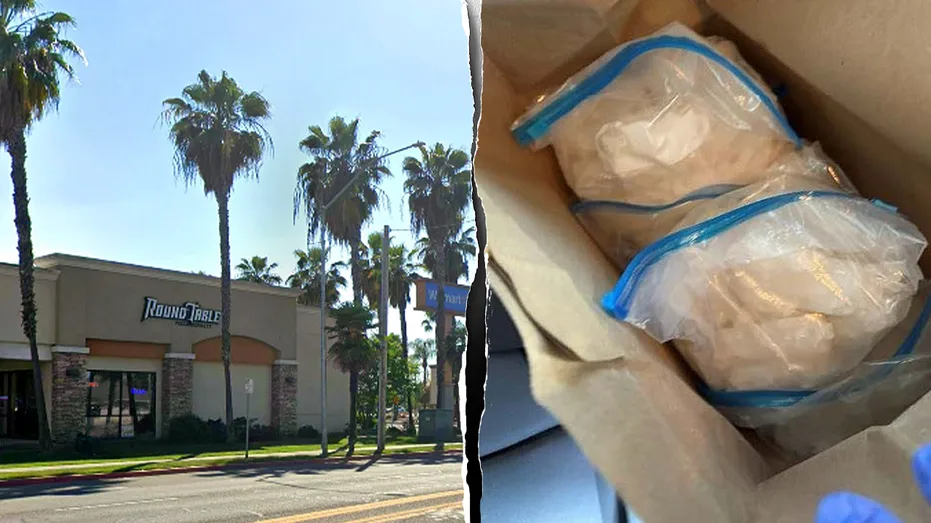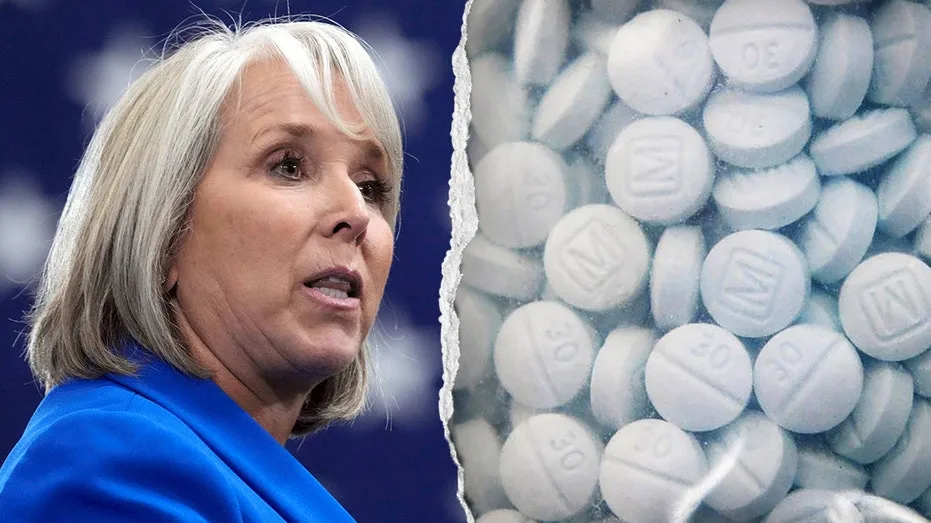
New Mexico Governor Michelle Lujan Grisham is seeking reparations from the federal government, contending that the Drug Enforcement Administration (DEA) permitted millions of fentanyl pills to infiltrate her state during a covert operation without informing state or local officials.
Governor Lujan Grisham characterized the alleged operation as "the most derelict, despicable act in my long career." She explained that the consequences have compelled New Mexico to allocate more than $1.5 billion towards law enforcement, behavioral health services, addiction treatment, and various public safety initiatives, all while grappling with escalating overdose fatalities and widespread addiction.
"The DEA stood silently by and watched thousands of fentanyl pills get distributed with no arrests, no evidence, no notice that we know of anywhere else," Governor Lujan Grisham stated during a press conference on Monday. "Someone must pay for the damage to this state, the public safety risks that will be shared by everyone here for a decade."
New Mexico's Demands for Accountability
Governor Lujan Grisham emphasized her desire for the federal government to reimburse New Mexico for the substantial funds expended in combating the fentanyl epidemic. This includes costs associated with law enforcement efforts, behavioral health programs, addiction recovery services, overdose prevention strategies, and other public safety measures.
Additionally, she urged Congress to implement a ban on similar DEA operations in the future. Her demands also include a requirement for the federal government to fully cover any costs imposed on states by such operations and for the officials involved to be held personally accountable.
"I've had to do this since 2019 three times," Governor Lujan Grisham noted. "We're here again, and this one, in fact, I think is the most devastating."
The Democratic governor drew parallels between this controversy and previous federal shortcomings she believes have adversely affected New Mexico. She cited the federal response to the COVID-19 pandemic and the U.S. Forest Service's controlled burns that inadvertently ignited the state's largest wildfire. She highlighted that the wildfire ultimately led to a multi-billion-dollar federal liability settlement, suggesting that the DEA operation warrants similar accountability.
Governor Lujan Grisham revealed that her administration had repeatedly appealed to both the Biden and Trump administrations for increased federal resources to address New Mexico's growing fentanyl crisis. These requests, which included additional DEA agents and coordinated enforcement efforts, reportedly received no response.
"Everybody behind me and the Office of the Governor have been asking both administrations… to do more about public safety in the state of New Mexico," she said, detailing multiple meetings, numerous letters, and requests for more resources and agents, yet observing a "remarkably silent" response.
The governor also called upon lawmakers to mandate that federal agencies notify state and local officials before conducting similar operations. She advocated for the restoration of approximately $25 million in federal funding for behavioral health and public safety, which she claims has been cut, and for the enactment of legislation to prevent the use of similar DEA tactics in the future.
Attorney General Initiates Investigation
These statements followed New Mexico Attorney General Raúl Torrez's announcement of a criminal investigation into allegations that the DEA knowingly permitted hundreds of thousands of fentanyl pills to reach New Mexico communities while agents pursued larger criminal investigations.
Reports indicate that DEA agents continuously monitored, but did not interdict, significant fentanyl shipments between 2023 and 2025, in an apparent effort to build more expansive criminal cases.
Attorney General Torrez stated that his investigation would explore various legal avenues, including criminal prosecution, civil litigation, and structural reforms designed to prevent similar conduct by DEA agents in the future.
"The families who have lost children, siblings, and parents to fentanyl deserve the truth about what the federal government knew and what it failed to do," Torrez asserted in a statement.
He continued, "If the DEA stood by while poison flooded our communities, that is not a bureaucratic failure. It is a betrayal of the people it was sworn to protect."
Torrez affirmed that his office "will pursue every legal avenue available to hold the responsible parties accountable and make certain this never happens again."
Call for Personal Accountability
On Monday, Governor Lujan Grisham echoed Attorney General Torrez's demand for accountability, insisting that those who authorized or oversaw the operation should face consequences.
"I want the people who knew this distribution was occurring without notifying anyone and allowing it to occur over and over again held accountable," Governor Lujan Grisham declared. "My bet is many of those people are still in that DEA office."
"I am so angry. This is an outrage," she added. "They should be accountable for the length of time it's going to take us to combat the scourge of addiction and fentanyl overdose deaths."