Major League Baseball's central office and team ownership groups have recently intensified efforts to frame high spending as a significant issue. A coordinated marketing initiative, prominently featured during broadcasts on the league's streaming platforms, highlights payroll differences as unacceptable, advocating to "Level the Playing Field."
This campaign frequently points to teams like the Los Angeles Dodgers, using visual aids such as bar charts to illustrate their substantial payroll and luxury tax obligations. It's worth noting that luxury tax payments are subsequently redistributed to smaller market clubs. The overarching goal of this public relations drive appears to be cultivating fan support for a potential future lockout and the eventual implementation of a salary cap. Evidence suggests this strategy is resonating, with social media platforms showing numerous baseball enthusiasts echoing ownership's stance, often prioritizing profit concerns over on-field results, and demanding greater financial control for teams.
Challenging the Narrative of Disparity
The implicit message conveyed by this organized effort is that smaller market franchises or those with lower payrolls face insurmountable odds when competing against large market, high-spending organizations. The New York Yankees and the aforementioned Dodgers are frequently cited as prime examples of this alleged imbalance. However, the campaign notably omits discussing other teams operating within these same major markets.
For instance, the New York Mets, according to Sportrac, hold the highest payroll commitments for the 2026 season. Despite this significant financial outlay, the Mets currently stand at 53-68, occupying last place in the NL East, 19.5 games behind the division leader, and 11 games out of the third wild card spot. Similarly, the Los Angeles Angels, located just 30 miles from Dodger Stadium in the nation's second-largest media market, have not reached the playoffs since 2012. With a record of 46-74, they possess one of the worst records in baseball as the season nears its conclusion.
Other large market teams also present counter-narratives. The San Francisco Giants, a historic franchise in one of the country's largest media markets, boasts a payroll of approximately $200 million. Yet, they are 50-70, a substantial 22 games behind the NL West leader. The Philadelphia Phillies, consistently among baseball's top spenders in a major market, recently dropped out of playoff contention. Even the New York Yankees are in second place, while the Toronto Blue Jays, with a top-five payroll, are effectively eliminated from playoff contention at 58-63. The Houston Astros, a top-10 payroll team, are 61-60, closely trailed by their regional rival, the Texas Rangers, at 60-60.
Major League Baseball asserts that "Too many fans in markets across the game have too little hope that their team has a fair chance to win," a statement clearly intended to bolster its preferred argument.
Underdog Success Stories
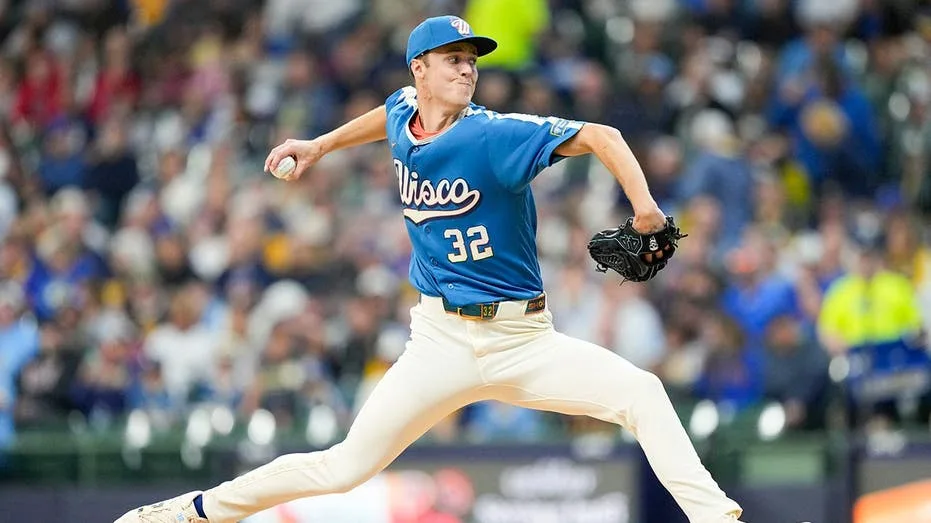
Given the struggles of several high-spending teams, it becomes pertinent to examine who is actually achieving success. With just over 40 games remaining in the season, the two best records in baseball belong to the Milwaukee Brewers and the Tampa Bay Rays.
The Milwaukee Brewers entered Wednesday at 74-46, positioning themselves for a first-round bye and home-field advantage throughout the postseason. In the American League, the Tampa Bay Rays improved their record to 74-46 with a dominant victory over the Oakland Athletics, extending their winning streak to nine games.
Notably, the Brewers rank 19th in payroll, while the Rays are 23rd, according to Sportrac. Another team currently in first place, the Chicago White Sox, ranks 25th in payroll. The Cleveland Guardians, despite having the league's lowest payroll and enduring a recent 2-8 stretch, remain just two games out of a wild card position.
Playoff Randomness and Public Opinion
The success of these lower-payroll teams raises a crucial question: What implications does this have for the "fans have no hope" narrative? Will MLB and team owners encounter greater resistance in their campaign for a salary cap, especially given the consistent success of franchises like the Brewers and Rays?
Realistically, a shift in public opinion might not be immediate. Fan perception often hinges on postseason and World Series outcomes, frequently overlooking the more statistically significant 162-game regular season sample. Public support for a salary cap will likely be shaped by playoff results, even if such judgments are often misinformed.
Postseason series victories are frequently influenced by opportune timing and an element of randomness, with talent advantages playing a comparatively smaller role. Unlike in the NFL, the most dominant team does not consistently win in MLB; in fact, the opposite is often true. The Los Angeles Dodgers, for example, despite winning 100-plus games and assembling formidable rosters, have fallen short in the playoffs in 2017, 2019, 2021, 2022, and 2023, illustrating that regular season dominance does not guarantee postseason triumph.
The Rays and Brewers have effectively constructed strong rosters that have yielded significant regular season success over the broadest possible sample size. However, come October, these samples are compressed into best-of-five or best-of-seven series, where the advantage of having the best regular season record is significantly diminished.
Many fans will likely base their assessment of a salary cap's necessity on whether a team like the Dodgers secures another championship. But what if the Brewers or Rays were to win a title? Tampa Bay, after all, reached the World Series in 2020, more recently than teams like the Mets, Red Sox, or Giants. Would such an outcome genuinely alter public perception, or would the established arguments and promotional efforts persist? The ongoing success of Milwaukee and Tampa Bay this year might provide some answers regarding fans' hope for their team's championship prospects.