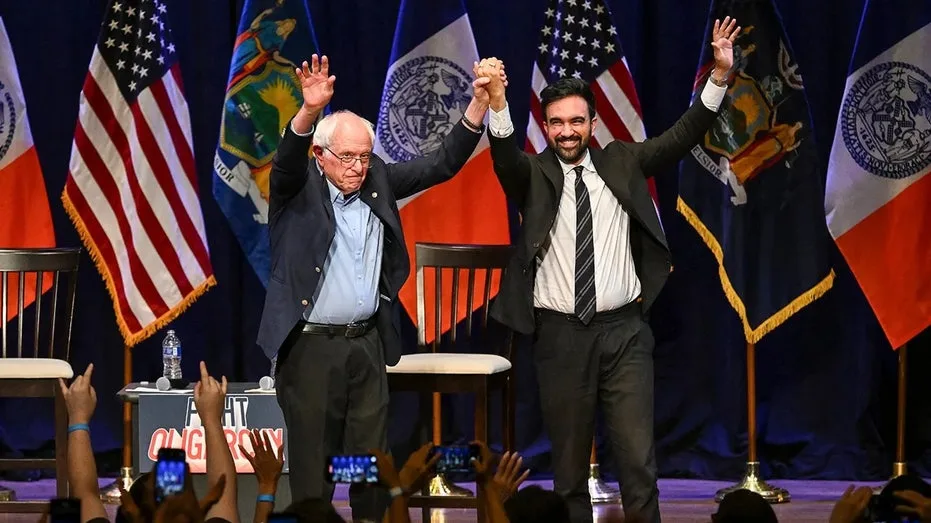
New York State Assemblyman Zohran Mamdani recently criticized the Democratic Party, asserting in an interview with Rolling Stone that the organization has become primarily directed by "well-paid consultants and big money interests."
Mamdani's remarks were made during a discussion prompted by comments from former Democratic National Committee (DNC) Chair Jaime Harrison. Harrison's statements followed a primary election last month where candidates supported by the Democratic Socialists of America (DSA) successfully unseated incumbent politicians, despite having previously expressed criticism of the party itself.
Harrison's Stance on Party Loyalty
Harrison conveyed his perspective on party affiliation and candidate selection through a post on X, emphasizing a clear boundary for those seeking the party's nomination.
I say this with no ill will or animosity: if you hate the Democratic Party, then please don’t run for our nomination. Don’t use our resources. Don’t rely on our volunteers. Don’t use our infrastructure. Don’t ask Democrats to invest their time, money, and energy in your campaign. Focus on building the party you actually support.
Political parties aren’t perfect, but they’re built by millions of people who knock doors, make calls, organize meetings, and fight for the values they believe in. If you don’t believe in the party, then don’t ask its members to carry you across the finish line.
Mamdani's Rebuttal and Vision for the Party
In his response, Assemblyman Mamdani offered a pointed observation regarding Harrison's prefatory remarks. "I think usually if someone says this is not of any ill will or animosity, what they're about to say is characterized by ill will and animosity," Mamdani stated.
He then stressed the importance of the Democratic Party being accountable to the voters, especially those who have demonstrated support for socialist candidates. Mamdani contended that while Harrison's viewpoint might not align with the party's current operational reality, dominated by consultants and financial interests, it accurately reflects what Democratic voters truly desire.
You say that that is not representative of the party. It may not be representative of what has effectively become our party, which is something that's run by well-paid consultants and big money interests, but it is representative of what Democrats themselves want to see. And it's representative of the fact that, in this country, there is just one majority and that's of the working class. And that's not just true in this city. It's not just true in another city. It's true across the entirety of our nation. And people want to see a party that understands that and fights for that.
Previous Criticisms and the New Deal Echo
Mamdani has previously voiced similar concerns, noting in an interview last month that the Democratic Party had "lost its focus on working people." At that time, he advocated for greater efforts to address the issue of high prices affecting everyday citizens.
He drew a parallel to a significant period in American political history, remarking, "You know, you look at the four freedoms. You look at the real core of the New Deal. There was a moment when this party was unabashed about its focus on working people. And I'm excited to bring it back there."
Defining the "Working Class"
However, during a recent weekend discussion, Mamdani encountered difficulty in providing a precise definition of who constitutes the "working class." He characterized this group as "those who are working to try and afford the basic dignities of life and aren’t able to do so," ultimately drawing a financial boundary at approximately "a million dollars a year."