John Harkes, a distinguished member of the 1994 United States Men's National Team (USMNT) World Cup roster, shared a common sentiment among spectators at Levi's Stadium regarding the controversial dismissal of Folarin Balogun. He recounted his immediate reaction to the incident.
“You know, we’re in the stadium, and right away I think I was standing there next to my daughter-in-law and our grandson, and then my son and my wife. Both my son and my wife, Cindy and Ian, turned and said, ‘That’s not a red card.’ And I’m like, ‘Oh my God,’” Harkes stated. “I don’t think it was a red card at all, to be honest with you.”
The decision to issue a red card to Balogun forced the USMNT to continue the remainder of the match with only ten players. Furthermore, a red card typically carries an automatic suspension for the subsequent game. This means a single call by an official can significantly influence multiple contests, even if the play in question is, as Harkes described it, a “50/50” situation.
A Personal Precedent from 1994
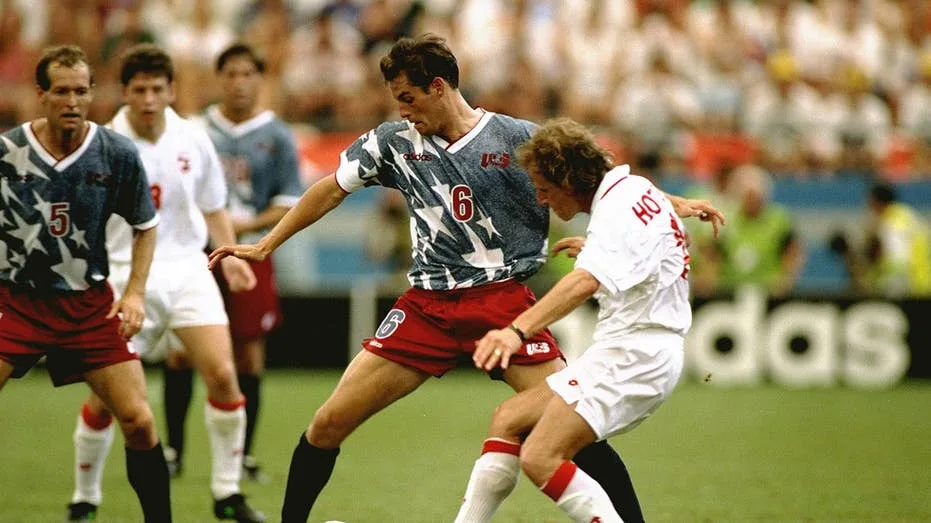
Harkes experienced a similar predicament during the 1994 World Cup, the last time the United States served as host nation prior to the upcoming tournament. During that competition, he accumulated two yellow cards across the first and third matches, leading to his suspension from the United States' crucial July 4 fixture against Brazil.
“It crushed me. I kept thinking to myself, this is the best in the world coming together, and you’re going to make a player sit out the next game because of yellow card accumulation?” Harkes reflected on his past experience.
Advocating for Rule Adjustments
While soccer's fundamental rules are generally considered more stable than those in sports like baseball, Harkes expressed a desire for a specific change: that red cards incurred in one match should not automatically lead to suspensions affecting subsequent games.
“That’s way above my pay grade, but at the same time, so many people discuss it on a consistent basis. So let’s really take a look at this and see: Does it make sense? I don’t think it does. Not in a tournament format. I don’t think so,” he argued.
Current FIFA Regulations on Disciplinary Actions
Despite these calls for review, the current framework offers no immediate recourse for such decisions. Article 9.6 of the 2026 World Cup regulations explicitly states: “No protests may be made about the referee’s decisions regarding facts connected with play. Such decisions are final and not subject to appeal, unless otherwise stipulated in the FIFA Disciplinary Code.”
Moreover, Article 10.5 of the same regulations clarifies the direct consequence of a sending-off: “If a player or team official is sent off as a result of a direct or indirect red card (second caution), they will automatically be suspended from their team’s subsequent match.”
Impact on the Upcoming Match
Even though Balogun's action did not appear to be intentionally malicious, the USMNT must now contend with finding a replacement for a player who has arguably been one of their most impactful talents. This absence comes at a critical juncture, ahead of what is being characterized as potentially the most significant match in U.S. soccer history on Monday night.