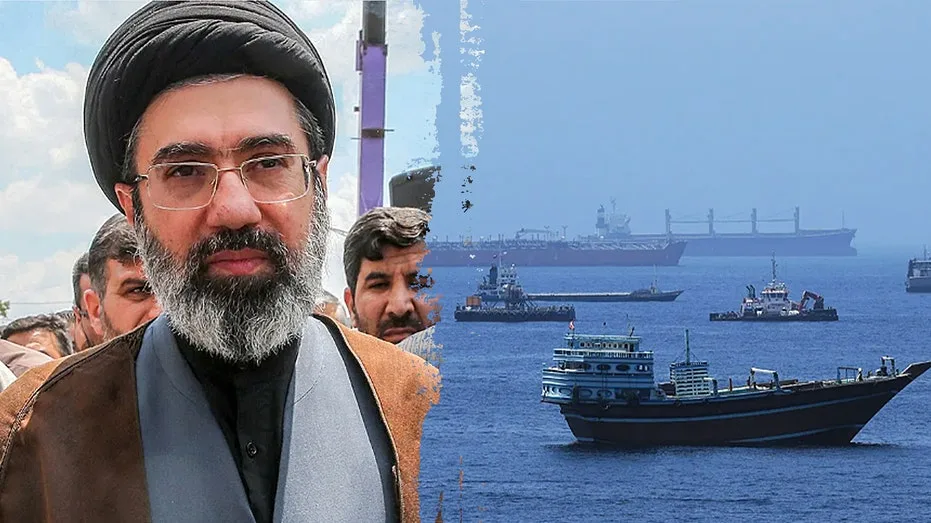
Iran's recent aggressive actions against commercial shipping vessels emerged as the United States and Oman initiated efforts to direct more maritime traffic through an emerging southern shipping corridor. This alternative route, which traces Oman's coastline, is strategically designed to move vessels further from Iran's immediate operational range.
For many decades, Iran's capacity to disrupt shipping through the Strait of Hormuz has afforded it significant geopolitical influence. However, this advantage is increasingly being challenged as Gulf nations invest in pipeline networks that circumvent Hormuz and as the U.S. and Oman broaden the utilization of this southern maritime pathway.
According to the maritime intelligence firm Windward, nearly half of all inbound commercial traffic typically passing through the strait is now opting for this alternative route.
Following Iranian assaults on vessels employing the new corridor, the United States responded with strikes targeting Iranian military assets linked to maritime operations. Iran subsequently retaliated with attacks on U.S. installations and regional partners, before a mutual agreement was announced to halt further strikes and resume negotiations in Doha.
Despite the announcement, Iran has publicly denied any intention for its negotiators to meet with U.S. officials in Qatar.
Iran's Strategic Calculus in Maritime Control
Former Navy Fifth Fleet commander Vice Admiral Kevin Donegan indicated that Iran's primary objective might not be to completely halt shipping traffic.
Instead of an outright closure of the strait, Donegan suggested that Iran's strategy centers on maintaining insurance premiums at a sufficiently high level, thereby deterring commercial shipping companies from resuming normal operations. He explained:
Their strategy is to enforce their control of the straits by driving up insurance costs while continuing to test the U.S. resolve.
The current situation raises questions about Iran's ability to translate its military pressure into enduring influence over the strait.
Under the terms of a memorandum of understanding negotiated after the recent ceasefire, Iran, Oman, and other Gulf littoral states are expected to engage in discussions regarding the strait's "future administration and maritime services." During a 60-day period, commercial traffic is permitted to traverse the strait without incurring tolls.
President Donald Trump, via social media, has insisted there will be "NO TOLLS" after this negotiating period, even though the memorandum itself does not explicitly guarantee this outcome. When questioned about this disparity, Trump asserted that "common sense" combined with the potential for renewed U.S. military action would prevent Iran from impeding commercial traffic.
Conversely, Iran has articulated a different vision. A news outlet associated with the Islamic Revolutionary Guard Corps (IRGC) characterized last-minute amendments to the agreement—including provisions for the strait's future administration and the temporary toll suspension—as significant negotiating triumphs for Tehran.
The White House did not provide immediate comment ahead of the scheduled negotiations.
Regional Partners Push Back on New Arrangements
America's allies in the Gulf have also made it clear they have no interest in altering the existing status quo. Saudi Foreign Minister Prince Faisal bin Farhan stated:
The management of the strait was working fine before the conflict. Why should we now, as a result of a conflict, accept some novel arrangement?
This divergence of opinion underscores competing perspectives on Iran's prospective role in the strait once the hostilities conclude.
David Schenker, a former Assistant Secretary of State, observed that these negotiations represent Iran's attempt to emerge from the conflict with "a new status quo in the Persian Gulf."
However, preserving leverage over the strait extends beyond mere commercial shipping concerns.
Clionadh Raleigh, executive director of the Armed Conflict Location & Event Data project, noted that Iran is "trying to basically step into that void." Raleigh suggested that the recent conflict has led Gulf governments to question the reliability of the U.S. as a partner, creating an opening for Tehran to advocate for regional countries, rather than Washington, to increasingly manage Gulf security.
Accelerated Shift Towards Regional Self-Reliance
These emerging doubts are already influencing regional strategic planning.
Raleigh highlighted that Gulf nations are "seeking to really develop their own defense posture" and are also "seeking alternative means for them to continue trade."
While these initiatives have been underway for several years, the recent conflict has notably accelerated their implementation.
Saudi Arabia has made substantial investments in its East-West Pipeline, which connects Gulf oil fields to the Red Sea. Similarly, the United Arab Emirates has expanded its export capabilities through Fujairah, enabling crude oil exports to bypass the Strait of Hormuz entirely.
Each barrel of oil that departs the Gulf without transiting the strait, and every ship that safely utilizes the southern corridor, incrementally erodes the leverage Iran has historically derived from one of the world's most critical maritime choke points.
Should these alternative routes and infrastructure continue to expand, Iran's capacity to employ the strait as a strategic pressure point could gradually diminish, even if the Strait of Hormuz itself retains its status as a vital global energy corridor.