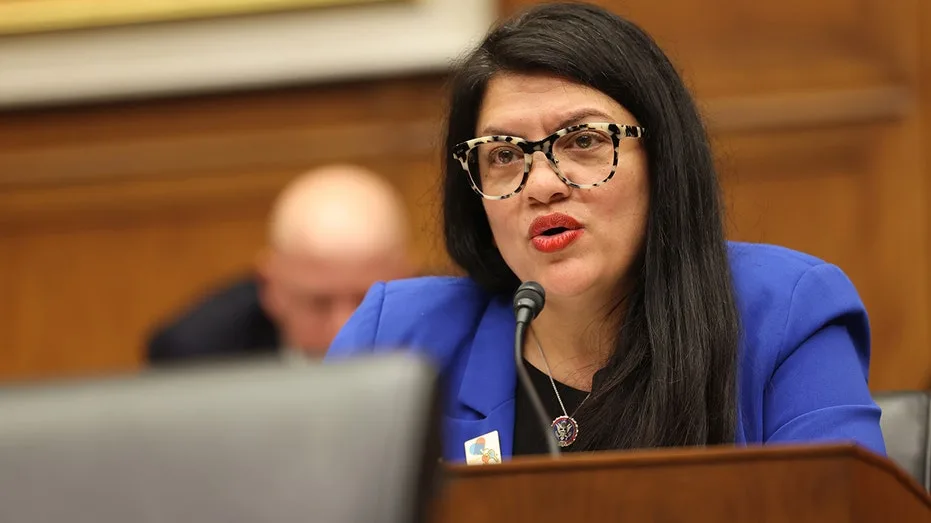
The U.S. House of Representatives recently voted down a resolution proposed by Representative Rashida Tlaib, a Michigan Democrat, which aimed to curb American military involvement in Lebanon.
The measure saw a significant bipartisan defeat on Tuesday, failing with a vote of 189 in favor and 235 against. Notably, 22 Democratic representatives sided with nearly all Republicans to oppose the resolution.
Details of the Proposed Resolution
Tlaib's resolution sought to specifically prohibit U.S. forces from participating in "any hostilities" within Lebanon. This proposal came despite the fact that the U.S. military is not actively engaged in Israel's conflict in Lebanon and conducts only a limited number of operations in the country.
Among the Republicans who supported the resolution was Representative Thomas Massie of Kentucky, a prominent critic of Israeli policy.
Conversely, House Minority Leader Hakeem Jeffries, a Democrat representing New York, guided the majority of his party in voting against the measure. Jeffries had previously opposed an earlier war powers resolution put forth by Tlaib.
It is important to note that this resolution was a concurrent resolution. Such measures are largely symbolic and do not require presidential approval or face a potential veto, even if passed by Congress.
Context and Concerns
Representative Tlaib, the only Palestinian American in Congress, has been a vocal opponent of Israel. She has leveled accusations of "ethnic cleansing" against the Jewish state concerning its actions in Gaza and Lebanon. Her strong criticisms of Israel's military campaign in Lebanon have led to accusations from some Republicans that she is inadvertently providing cover for Hezbollah, an Iran-backed militant group.
The resolution itself did not explicitly mention Hezbollah. The terrorist group has been involved in military confrontations with Israel since early March, coinciding with the broader conflict in the region.
The recent vote followed an earlier attempt by Tlaib this month to force a vote on a more extensive Lebanon war powers resolution. Critics of that initial proposal argued it would have necessitated the withdrawal of U.S. military personnel responsible for protecting embassy staff and would have restricted aid to the Lebanese Armed Forces, which are actively combating Hezbollah.
Tlaib subsequently revised her second resolution to include explicit exemptions, clarifying that it would not affect the protection of diplomatic personnel or cooperation with Lebanon's military.
Debate on the House Floor
Republicans raised questions regarding the timing of the resolution, given that the United States is not currently at war in Lebanon.
"There are not U.S. combat forces conducting operations or engaged in hostilities in Lebanon," stated Representative Brian Mast, a Florida Republican and Chairman of the House Foreign Affairs Committee, during the floor debate. "They are training the Lebanese Armed Forces.
"Why are they training?" Mast continued. "Because there’s probably at least 40,000 — probably more — Hezbollah terrorists spread across the South of Lebanon that are actively engaged in targeting Israel and have been doing so for many years."
In response, Representative Gregory Meeks, a New York Democrat and Ranking Member of the House Foreign Affairs Committee, argued that the resolution aimed to prevent the United States from becoming entangled in "another forever war that is not in our national interest."