Attorney Criticizes Hawaii's Defense of Gun Law Using "Disgraceful" Black Code Statute
A lawyer involved in the landmark Supreme Court case overturning Hawaii's concealed-carry restriction on private property condemned the state's use of a Reconstruction-era Black Code in its legal arguments.
Politics·
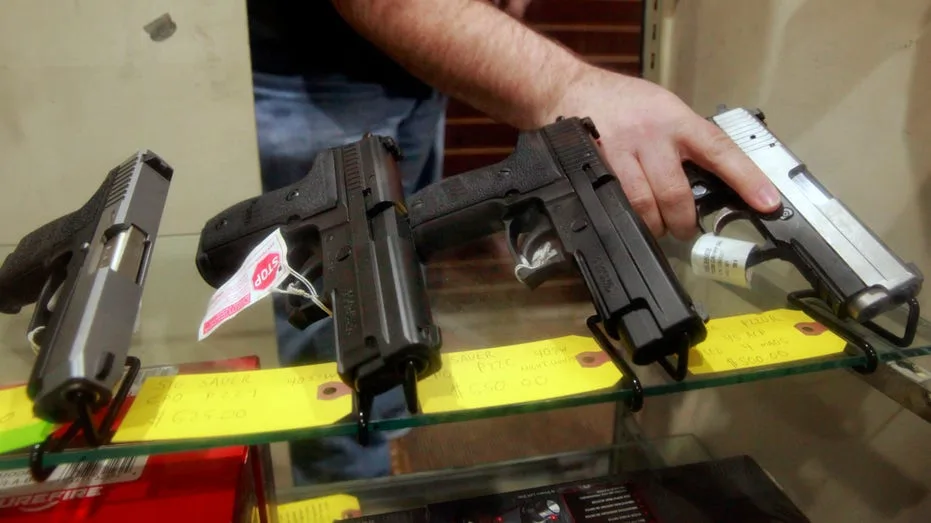
The legal counsel instrumental in convincing the Supreme Court to invalidate Hawaii’s restriction on carrying concealed firearms on private property publicly criticized the state’s decision to cite a Reconstruction-era Black Code in its defense of the regulation.
In a 6-3 decision handed down in Wolford v. Lopez, the High Court determined that Hawaii cannot compel licensed gun owners to secure explicit permission before bringing firearms onto private premises that are open to the general public. Advocates for gun rights had dubbed this particular policy the "vampire rule," due to its requirement that legal gun owners had to be "invited in" before entering commercial establishments while armed.
"And it's not surprising, however, that Hawaii would rely on it as they are diametrically opposed to the Second Amendment. We fully expected that the Supreme Court would identify that as the kind of law that one absolutely should not look to determine whether or not something is constitutional because this is the perfect example of something which is not constitutional."
The Bruen Precedent and Hawaii's Historical Argument
A significant point of contention arose from Hawaii's attempt to justify its law under the framework established by the Supreme Court’s 2022 ruling in New York State Rifle & Pistol Association v. Bruen. Since the Bruen decision, courts assessing modern firearm regulations have typically inquired whether such restrictions align with the nation's historical tradition of gun control.
Hawaii presented several historical statutes, including an 1865 Louisiana law enacted as part of the post-Civil War Black Codes. This specific statute made it illegal to carry firearms onto another person's property without the owner's explicit consent.
Majority Rejection of the Black Code
Justice Samuel Alito, authoring the majority opinion, unequivocally rejected this argument. He characterized the Louisiana statute as a "tainted artifact," explaining that it was implemented to disarm recently emancipated Black Americans, leaving them vulnerable after the Civil War. Justice Alito concluded that the law "cannot be taken seriously" as valid evidence of the Second Amendment's original public meaning.
Justice Jackson's Dissent and Unresolved Questions
Conversely, Justice Ketanji Brown Jackson argued in her dissenting opinion that the Court bypassed a critical constitutional inquiry.
Justice Jackson did not defend the Black Codes, acknowledging their racist nature and their use in oppressing newly freed Black Americans. However, she contended that the Court should have first determined whether the Louisiana law itself infringed upon the Second Amendment, or if the primary constitutional issue stemmed from its racially discriminatory enforcement.
"It might well be that the Black Codes are invalid inputs for Bruen's test," Jackson wrote, "but only if they violated the Second Amendment — which may or may not be the case."
Instead, she argued that within the Supreme Court's Bruen framework, the Court could not simply dismiss these historical laws without first clarifying why they should not be considered as historical evidence.
She outlined two potential scenarios: either the firearm restrictions within the Black Codes were constitutional but applied in a racially discriminatory manner—thus making the constitutional flaw an equal protection issue—or the restrictions inherently violated the Second Amendment. The Court, she asserted, never resolved this fundamental question before excluding the Louisiana law from its consideration.
"Either history does matter, and if so, all potentially relevant historical experiences must be thoroughly examined," she wrote. "Or, it does not, and the Court should just admit that the test it has created is boundless."
Critiques of the Dissenting Opinion
Justice Jackson’s reasoning immediately drew criticism from commentators who highlighted that the Fourteenth Amendment was ratified specifically to address laws like the Black Codes, which denied newly freed Black Americans their constitutional entitlements, including the right to bear arms.
"That right there is your answer," Hill continued. "Yes, there was a historical tradition — they enacted a constitutional amendment to fix that deprivation of rights, and that is also in the Constitution now, so I think she should probably go back to law school."
Tyler Yzaguirre, president of the Second Amendment Institute, echoed this criticism.
Businesses retain the ability to prohibit firearms on their premises by clearly posting or enforcing a "no firearms" policy. However, what Hawaii is now prohibited from doing, according to the Court, is treating every business as off-limits to licensed gun owners unless the proprietor explicitly permits firearms.
Related Stories
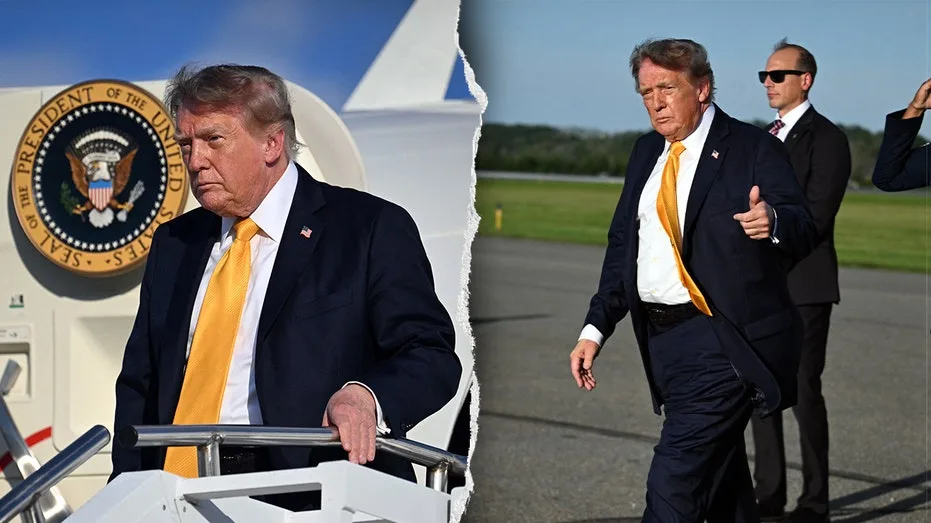
Former President Trump's Apparent Hair Color Change Ignites Online Discussion
Former President Donald Trump's hair appeared noticeably darker on Friday, sparking extensive online discussion. Photos showed him arriving in New Jersey with a brunette-like hue, leading to numerous social media
Sep 6
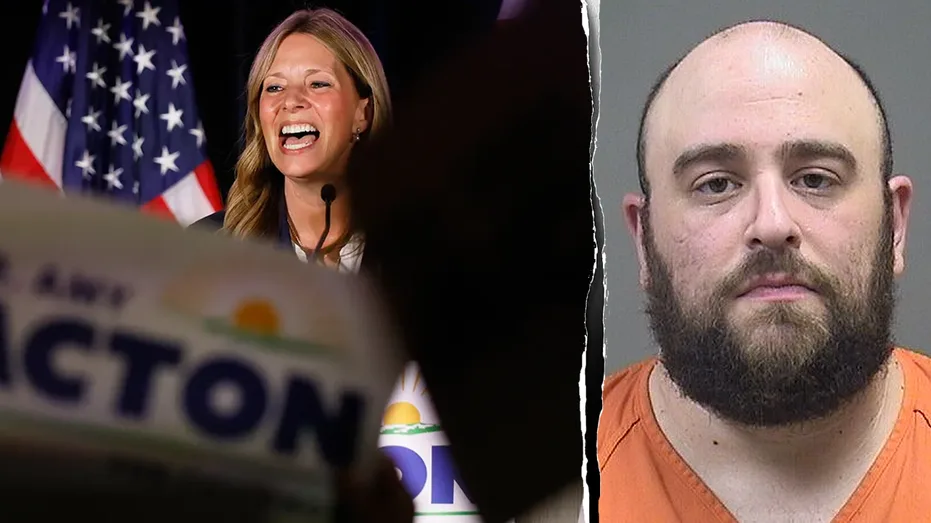
Armed Man Detained After Forcibly Approaching Ohio Gubernatorial Candidate Amy Acton at Fair
A man carrying a taser and two pistols was arrested at the Canfield Fair after allegedly assaulting multiple attendees while attempting to confront Ohio gubernatorial candidate Amy Acton. Acton was unharmed in the
Sep 6

Hasan Piker Defies Democratic Critics, Names Alexandria Ocasio-Cortez His 2028 Presidential Choice
Hasan Piker, a prominent progressive streamer, has rebuffed Democratic Party criticisms of his polarizing comments. He asserts his independence from party image, clarifies past statements, and announces his support for
Sep 6
House Democrats Prepare Extensive Investigations Into Trump Administration if They Secure Majority
House Democrats are poised to launch a series of investigations into former President Donald Trump, his family, and administration officials if they win a majority in the upcoming midterm elections. Key figures like
Sep 6