Graham Platner Suspends Maine Senate Campaign Following Rape Allegation and Widespread Democratic Pressure
Democratic nominee Graham Platner ended his bid for a pivotal Maine Senate seat after a bombshell rape allegation and widespread calls from within his party for his withdrawal.
Politics·
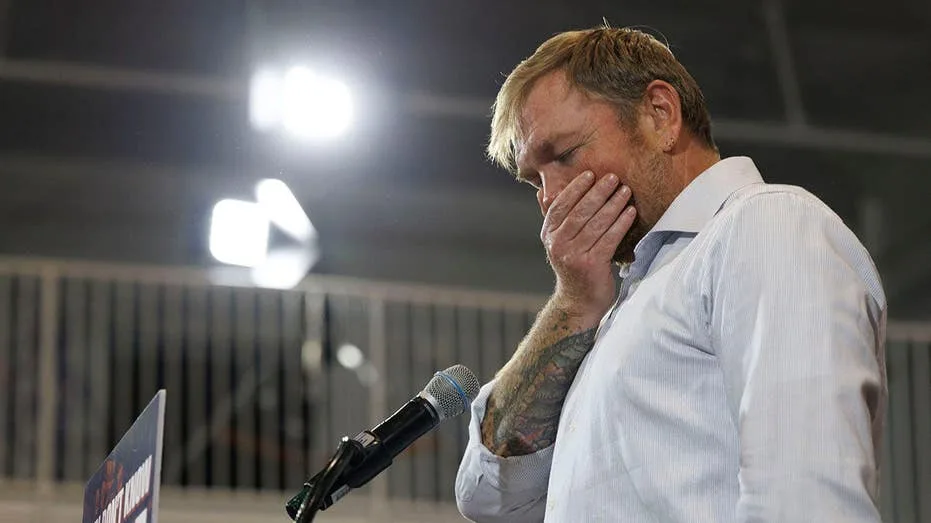
Platner Halts Campaign Amid Mounting Pressure
Graham Platner, the Democratic nominee for Senate in Maine, announced the suspension of his campaign on Wednesday. This decision came amidst a torrent of controversies and increasing demands from prominent Democrats, both within Maine and nationally, for him to exit the high-stakes contest.
Platner, a populist Democrat who received backing from Sen. Bernie Sanders (I-Vt.) last September, had been challenging long-serving Republican Sen. Susan Collins. Their race in Maine was highly anticipated, contentious, and expensive, representing one of a few contests that could decide whether the Republican Party retains its slim Senate majority in the upcoming November midterm elections.
In a video message shared on social media, Platner stated, "For the movement to continue, it can’t be me. For that reason, we are suspending campaign operations."
His withdrawal occurred just five days before a critical deadline that, if missed, would have prevented Maine Democrats from nominating a replacement on the general election ballot. The campaign suspension followed his landslide victory in Maine's Democratic Senate primary on June 9, but it came only two days after an explosive report on Monday afternoon included an allegation of rape from a woman he had previously dated.
Addressing the allegations, a visibly frustrated Platner asserted, "This is all false. The things that have been claimed did not happen. It is not real." Platner, who had run an outsider, anti-establishment campaign for nearly a year, pointed to the political establishment, arguing, "the brutal political reality is they are going to take everything away from us." He suggested that continuing his campaign would lead to losing crucial fundraising capabilities and access to vital voter data, both essential for any political bid.
"Those in power who have the ability to do so are using these allegations as an excuse to take away all the things that we need to run a campaign," he contended.
Allegations Fueling the Withdrawal
The primary allegation that precipitated Platner's exit originated from Jenny Racicot, a 41-year-old Maine resident. Racicot told CNN's Jake Tapper that Platner "raped" her, "by dictionary definition."
"I thought, here's a man who was drunk and who, by dictionary definition, raped me. And he's blaming drunk women," Racicot said. "So I just felt like that was a very odd take to have on that. And I also feel like with all of the comments that he made about women, sexual assault, rape, even, um, you know, the comments that he had made that was in The New York Times article about, you know, threatening people with rape, like, why does this person have this issue, like scattered throughout their life, throughout their commentary, like it‘s on their mind?"
Racicot also detailed in three interviews with Politico that Platner forced her to have sex against her will five years ago, a claim Platner denied in the Politico report. The report further indicated that a man Racicot dated afterward confirmed she had recounted the incident to him, and this account was corroborated by emails exchanged between Racicot and her therapist.
"I remember him grabbing my pelvis and being really forceful of me," Racicot told the outlet regarding the incident, which she alleged occurred while Platner was "almost blackout drunk." "I remember the specific moment where I thought to myself, like, ‘This is no longer my choice.’"
Racicot claimed that Platner entered her home uninvited and coerced her into unprotected sex despite her repeated demands for him to stop. She explained that "one of the reasons" she had not come forward sooner was the "huge moral conflict" between her political support for Platner and her personal disagreement with him "as a person." "I just want the truth out there," Racicot stated. "I just want people to have a whole scope of who he is as a person."
In a statement to Politico, Platner maintained, "These allegations are troubling, serious, and false. Any accusation of non-consensual behavior is categorically untrue." His campaign also posted a video on social media shortly after the Politico story broke, where Platner again labeled the allegations "false" and said he would "reflect" on the optimal path forward.
"So, regardless of the inaccuracy of the reporting, but mindful the political reality it will inflict, we are taking the time to reflect on the best path forward for the state that I love, the people that I love, the movement I belong to, and the goal of defeating Susan Collins," Platner said in the video. "Those were the goals when we launched this campaign, and they remain my goals today."
A second significant allegation of sexual impropriety surfaced on Tuesday. A report published by The Washington Post accused Platner of removing condoms during sex with his ex-girlfriend, Lyndsey Fifield, despite her explicit instructions for him to wear them. Fifield, 41, had previously accused Platner of physical misconduct during their relationship, alleging he sometimes gripped her forcefully enough to leave marks and once twisted her arm behind her back, pushed her into a bedroom, and held the door shut until she "calmed down." In a statement to The Washington Post, the Platner campaign dismissed Fifield's latest allegations as "categorically false and politically motivated," noting her past association with the conservative Heritage Foundation. In his Wednesday evening video, Platner reiterated that his campaign suspension was not "because of allegations. We’re doing it because of structures that are being taken away from us by those in power."
Democratic and Republican Responses
Following Platner's announcement, Senate Democratic Leader Chuck Schumer posted on social media, "Democrats are going to defeat Susan Collins, win Maine, and take back the Senate." The suspension occurred before a 5 p.m. deadline on Monday, July 13, set by state law for candidates to withdraw, enabling the Maine Democratic Party to replace him on the general election ballot. The party must select a new nominee by July 27.
The Maine Democratic Party, in a Tuesday night statement, announced officials were working "around the clock" to determine a replacement process, but accused Platner and his team of attempting "to put their thumb on the scale of what this process looks like." Platner's team responded by saying they had contacted the party but denied any efforts to influence the selection process. Hours before Platner's withdrawal, the state party had declared it would hold a nominating convention should he exit the race.
This prospect did not sit well with Platner, who stated in his video, "What comes next needs to come from the people. Needs to come from the people of Maine. Needs to come from the voters who on June 9….said no to this kind of politics. Voted for a politics that would actually represent them. Vote against the political system. Against the donor class. Against the entrenched forces."
He emphasized, "I’m not asking for how this process is going to work. I’m not trying to dictate to anyone how it should be or how we get there. But I will say this, it needs to be open, transparent, and democratic. It needs to be reflective of the will and the values of the people that built this movement, the people that showed up on June 9. People in DC should stay in DC. Decisions should not be made in backrooms by people in places of political power."
The Democratic Senatorial Campaign Committee (DSCC), one of the party organizations Platner criticized, pledged in a statement that it would "work tirelessly to ensure the new Democratic nominee has the infrastructure and resources to immediately turn their focus to the general election, and in November we will defeat Susan Collins and win a Senate majority."
Republicans quickly reacted to Platner's decision. Samantha Cantrell, Regional Press Secretary for the National Republican Senatorial Committee, asserted in a statement, "Maine Democrats elected a rapist Nazi to be their nominee for Senate, and regardless of who they anoint next, Susan Collins will be re-elected in November." Alex Latcham, executive director of the Senate Leadership Fund, a super PAC aligned with Senate Republicans, argued that "at the 11th hour, the Democrat Establishment has tipped the scales against Maine voters in an attempt to salvage their failing midterm strategy. Regardless of who Washington Democrats install, Senator Susan Collins will win in November."
Senator Collins issued her own statement, saying, "These allegations are appalling. Nevertheless, it is not up to me to choose the Democratic nominee for Senate."
A Swift Decline for a Populist Candidate
As Monday evening progressed, a growing chorus of prominent Democrats urged Platner to leave the race. Senator Schumer described the allegations in the Politico report as "incredibly disturbing – violence, abuse and sexual assault are absolutely unacceptable." In a joint statement with DSCC Chair Sen. Kirsten Gillibrand, Schumer stressed, "Graham Platner needs to immediately withdraw as the Democratic nominee for Senate and allow Maine Democrats the opportunity to choose a new candidate who can defeat Susan Collins. The DSCC will not invest in the Maine Senate race if Platner remains on the ballot."
Senate Majority PAC, the top super PAC aligned with Schumer that supports Democratic incumbents and candidates, announced it was "redirecting resources away from the Maine Senate race in light of the latest allegations against Graham Platner." The leadership of the Maine Democratic Party also issued a statement "calling Graham Platner to withdraw as the Democratic nominee for the U.S. Senate."
Several key supporters in Congress rescinded their endorsements. Rep. Ro Khanna of California, a top backer, withdrew his support, writing on social media, "I’ve been very clear that sexual assault or violence against women is a red line. These allegations are very serious and credible. Graham Platner should drop out from the race. I am withdrawing my endorsement." Khanna had previously noted, "I talked to Graham, and he says he was at a very dark period. He had come back from two tours of duty in Iraq as an infantryman seeing violence and death. That doesn’t excuse it."
Sen. Ruben Gallego of Arizona, another potential 2028 White House hopeful, also rescinded his endorsement, stating on social media, "The allegations against Graham Platner are troubling and deeply serious. I am rescinding my endorsement." Progressive champion Sen. Elizabeth Warren of Massachusetts, who had endorsed Platner and appeared with him, also withdrew her support. Our Revolution, a progressive political action organization founded by Senator Sanders, similarly announced it was withdrawing its endorsement.
On Tuesday, Senator Sanders released a statement: "I have spoken with Graham Platner about the best path forward for Maine. In light of these very serious allegations, I have recommended that he step aside."
Platner, who launched his U.S. Senate bid last August, quickly garnered large crowds and built a substantial fundraising war chest earlier this year, partly due to Sanders' early support and his tireless campaigning. However, his path to the nomination was marred by multiple controversies in recent months that clouded the final days of his primary campaign and overshadowed his victory.
Inflammatory past online comments from a now-deleted Reddit account resurfaced, coinciding with revelations about a now-covered-up tattoo on his chest that resembled a Nazi symbol. Reports then emerged that Platner had exchanged sexually explicit messages with several women while married, followed by allegations from ex-girlfriends detailing a history of rape fantasies, heavy drinking, and violent episodes. Platner consistently denied the allegations of violence.
A day before the primary last month, a former senior staffer from Platner's campaign wrote in an opinion piece for The Washington Post that Platner "is not someone who would be good for Maine or for the country." The escalating controversies drew significant attention, provided Republicans with additional ammunition, and led some Democrats in Washington to question Platner's viability as a candidate. Despite these issues, he successfully rode a populist wave to secure the nomination.
Platner, who had acknowledged his struggle with post-traumatic stress disorder (PTSD) from his three tours of duty with the Marines in Iraq and one tour with the Army National Guard in Afghanistan, apologized for his controversial Reddit posts after they gained media attention last fall shortly after he launched his Senate campaign. He also stated that he acquired the skull and crossbones tattoo in 2007 while drinking with fellow Marines stationed in Croatia, and that he covered it with a new design last year after learning of its resemblance to a Nazi symbol. However, allegations from an ex-girlfriend raised questions about Platner's timeline regarding his awareness of the tattoo's controversial symbolism.
In his primary night victory speech, Platner emphasized his belief in personal change. "If you believe, as I do, that we can change our politics and change our country, then you must also believe that people can change," Platner told the crowd. "And the reason I believe that is because I have lived it. And the reason that I have lived it is because of my wife."
Rumors about Platner's potential withdrawal began circulating the previous weekend, as multiple campaign events were canceled without official explanation. The Bangor Daily News reported on Monday that one organizer attributed a cancellation to Platner "not feeling well." The news of the canceled events prompted conservative outlets and commentators to speculate about an underlying reason or an impending end to his campaign.
The current Republican control of the Senate stands at 53-47, making the Maine seat a crucial target for Democrats aiming to reclaim the majority. Beating Senator Collins has proven challenging; six years prior, public opinion polls suggested she was headed for defeat, yet Collins defied expectations, winning re-election by nine points against then-Democratic state House Speaker Sara Gideon. Collins, a moderate Republican who occasionally votes against the agenda of former President Donald Trump, is seeking her sixth six-year term in the Senate.
Related Stories

Former President Trump's Apparent Hair Color Change Ignites Online Discussion
Former President Donald Trump's hair appeared noticeably darker on Friday, sparking extensive online discussion. Photos showed him arriving in New Jersey with a brunette-like hue, leading to numerous social media
Sep 6
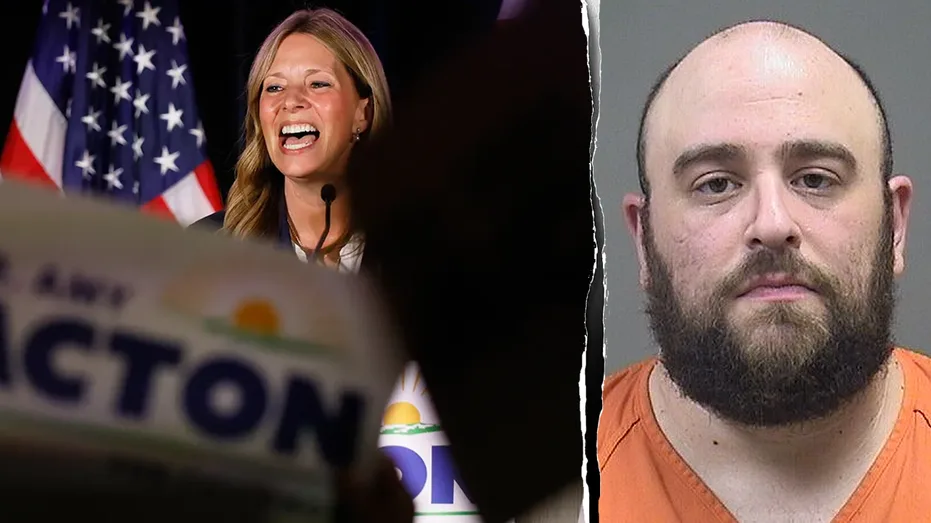
Armed Man Detained After Forcibly Approaching Ohio Gubernatorial Candidate Amy Acton at Fair
A man carrying a taser and two pistols was arrested at the Canfield Fair after allegedly assaulting multiple attendees while attempting to confront Ohio gubernatorial candidate Amy Acton. Acton was unharmed in the
Sep 6

Hasan Piker Defies Democratic Critics, Names Alexandria Ocasio-Cortez His 2028 Presidential Choice
Hasan Piker, a prominent progressive streamer, has rebuffed Democratic Party criticisms of his polarizing comments. He asserts his independence from party image, clarifies past statements, and announces his support for
Sep 6

House Democrats Prepare Extensive Investigations Into Trump Administration if They Secure Majority
House Democrats are poised to launch a series of investigations into former President Donald Trump, his family, and administration officials if they win a majority in the upcoming midterm elections. Key figures like
Sep 6