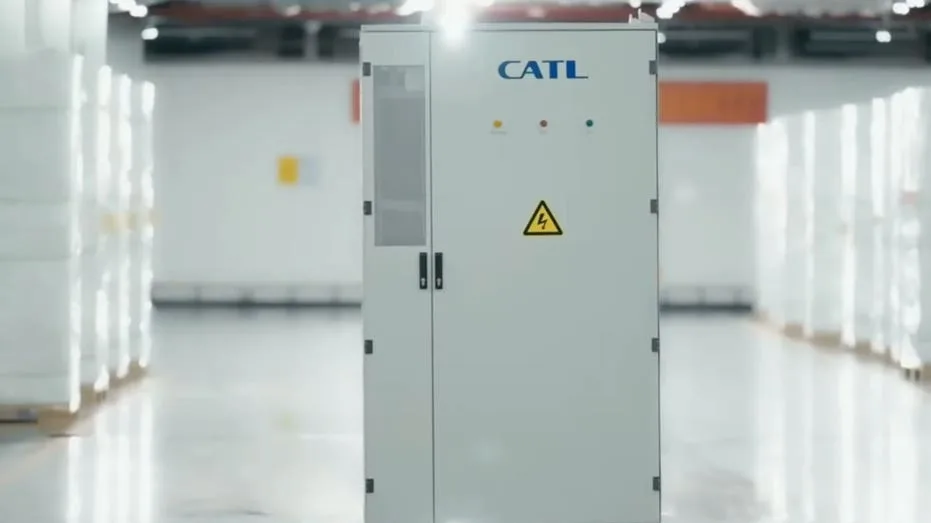
Contemporary Amperex Technology Co. Limited (CATL), a prominent Chinese battery manufacturer, has introduced a new sodium-ion battery system that could significantly influence the future of global power grids. The company's TENER Sodium Energy Storage System is heralded as the world's first field-validated sodium-ion energy storage solution ready for commercial deployment.
This innovative battery technology is designed for substantial energy storage projects intended to bolster grid stability, rather than for smaller consumer electronics. The focus on large-scale storage is becoming increasingly crucial as global electricity demand escalates. Factors such as the immense power requirements of AI data centers, the strain on local grids during heatwaves, and the necessity to store intermittent renewable energy from solar and wind sources all highlight the urgent need for advanced storage solutions.
While the TENER system has been launched in Munich, Germany, CATL has not yet announced specific plans for its introduction in the United States. Therefore, this development primarily points to the evolving landscape of grid storage technology rather than an immediate change for local utilities.
Addressing Growing Energy Demands
CATL anticipates that cumulative shipments of its TENER Sodium Energy Storage System will reach 1 gigawatt-hour (GWh) by the close of 2026. Deliveries within China are slated to commence in September 2026, with global distribution expected to follow by June 2027. This timeline underscores the imminent commercial viability of sodium-ion batteries for stationary storage applications, which can effectively store electricity generated by solar farms, wind projects, and other power sources for later distribution.
Such storage capabilities are vital for managing peak demand, especially during hot afternoons when air conditioning use surges, or when renewable power generation naturally declines later in the day.
Sodium vs. Lithium: A New Option
Currently, most large-scale battery storage initiatives rely on lithium-based systems. While lithium is effective, its supply chains can be constrained, leading to price volatility in response to demand fluctuations. CATL highlights that sodium is over 1,000 times more abundant than lithium and is globally distributed. This widespread availability could make sodium-ion batteries an appealing alternative for grid storage, where the physical size or weight of the batteries is less critical than for applications like smartphones or electric vehicles.
CATL clarifies that sodium is not expected to completely replace lithium in the near term. Instead, the company envisions sodium and lithium working in tandem within future energy storage ecosystems, offering energy providers more flexibility and reducing reliance on a single material.
System Specifications and Advantages
A key advantage of the TENER Sodium system is its compatibility with existing lithium iron phosphate (LFP) energy storage platforms. CATL states that the system shares the same physical footprint as LFP systems, potentially allowing developers to avoid costly enclosure modifications, project redesigns, or repetitive certification processes.
The TENER Sodium system boasts a rated capacity exceeding 30 megawatt-hours (MWh). Each module weighs approximately 42 metric tons (about 46 U.S. tons), and only 34 units are required to constitute a 1-GWh storage site. Its modular architecture also supports flexible storage durations, offering options for 1, 2, 4, 6, and 8 hours, which enables developers to customize projects according to specific local power requirements.
Battery storage systems must perform reliably across diverse climatic conditions, from extreme heat to freezing cold. CATL asserts that TENER Sodium is engineered for superior performance in extreme temperatures, enhanced safety, and reduced operating costs. The integrated battery management system reportedly provides an additional 20 percent safety margin compared to conventional lithium-ion batteries.
The system incorporates a top-discharge airflow design, which CATL claims reduces heat generation by almost 30 percent compared to traditional systems. Furthermore, auxiliary power consumption is said to decrease from the industry average of 2 percent to 1 percent. These features are particularly beneficial for large grid storage projects, especially in regions prone to high temperatures, severe weather, or heavy power demand. CATL also notes that TENER Sodium operates at only 65 decibels, 10 decibels quieter than conventional systems, which could mitigate local concerns when storage sites are located closer to population centers.
Commercialization and Global Outlook
CATL states that the TENER Sodium system has achieved full commercial maturity across its technology, production capacity, and supply chain readiness. The company has been engaged in sodium-ion battery research and development since 2016, with an investment of approximately $1.4 billion over the past decade.
CATL has expanded its sodium-ion production lines at its Fuding base in China, adding 40 GWh of annual capacity. A planned facility in Jining, Shandong, is projected to support 160 GWh of sodium-ion battery production capacity. In April 2026, CATL also secured a three-year, 60-GWh sodium-ion energy storage order with HyperStrong, described as the world's largest commercial contract for this technology.
These figures demonstrate CATL's serious commitment to the commercialization of sodium-ion storage. However, adoption in the United States would involve separate considerations, as American utilities, regulatory bodies, and developers would need to evaluate factors such as cost-effectiveness, performance metrics, supply chain risks, and security implications.
While this sodium-ion battery system may not be a direct consumer product, its underlying technology could profoundly influence how electricity is stored and delivered. If sodium-ion storage proves reliable in major energy projects, it could provide energy companies with an additional tool to support grid stability. This capability may become increasingly vital as AI data centers continue to drive up electricity demand.
Improved storage solutions enable utilities to utilize power more efficiently and help balance supply when demand rises rapidly. Nevertheless, these technologies have limitations; a new battery chemistry alone cannot resolve issues like aging transmission infrastructure, protracted permitting processes, or local grid bottlenecks. The primary takeaway is that sodium-ion batteries are emerging as a significant component in the evolving landscape of grid storage, offering a path for energy companies to develop more resilient and flexible storage projects.