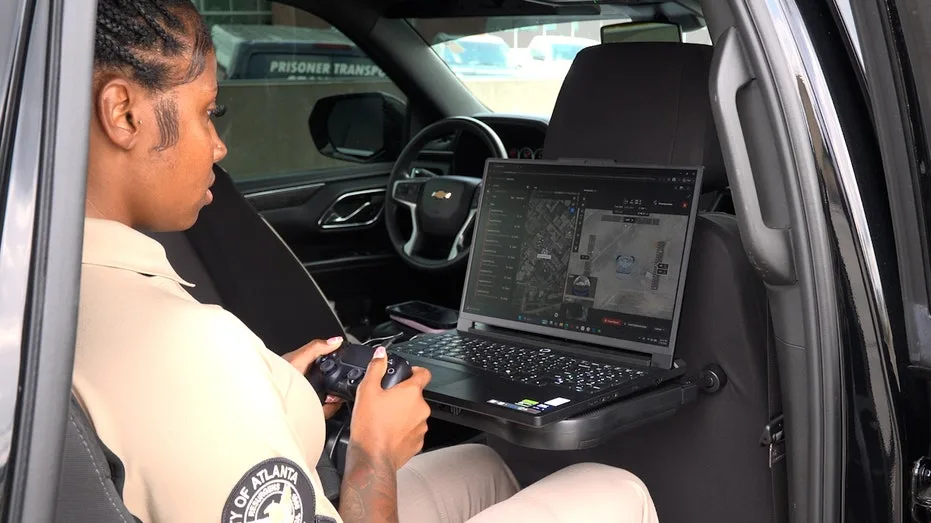
ATLANTA — As Atlanta prepares to host the World Cup semifinals, featuring England and Argentina at Atlanta Stadium, federal and local law enforcement have intensified security measures, particularly concerning aerial threats. The Federal Bureau of Investigation (FBI) and the Atlanta Police Department (APD) are collaborating on a significant security operation, utilizing advanced drone technology to monitor both ground-level and airspace activities.
Enhanced Aerial Surveillance and Enforcement
The FBI is actively enforcing the Federal Aviation Administration's (FAA) Temporary Flight Restrictions (TFRs) established around the World Cup venue. This proactive approach has led to the confiscation of a substantial number of unauthorized drones across the nation since the tournament began. Marlo Graham, Special Agent in Charge of the FBI Atlanta Field Office, reported that over 600 drones have been seized nationwide, with 86 of those confiscations occurring specifically in Atlanta.
Graham elaborated on the technology employed by the FBI to detect and neutralize aerial threats. She described a mechanism that allows agents to identify and respond to unpermitted drone flights within protected airspace, stating, “We've been able to safely land drones that have been unauthorized in the flight restricted area.”
While the FBI treats every drone as a potential security concern, Graham noted that the perceived threat level can escalate based on the drone's size and its proximity to the stadium. “Obviously, the closer to the venue, the larger the crowd,” Graham explained, adding that Atlanta's closed-dome stadium offers some inherent protection. She emphasized the goal of preventing disruptions: “We don't want the game to be impacted because a hobbyist couldn't control their drone, and it lands right when one of our star players was getting ready to score a goal.”
Atlanta Police Department's Drone Operations
The Atlanta Police Department's dedicated Drone Unit plays a crucial supporting role in this joint effort, assisting the FBI in identifying and tracking individuals suspected of operating drones within restricted zones. Sgt. Kindu Franklin of the APD's Drone Unit indicated that many of those intercepted are amateur enthusiasts, often attempting to capture unique footage for social media rather than posing a deliberate threat.
“In some cases, they just recently bought a drone just for FIFA to get some of the cool footage that they want to put up on their social media,” Franklin commented. However, he also underscored the inherent risks: “There are different ways that you can weaponize these drones. So, we're operating in a proactive manner.”
Beyond assisting the FBI, the APD's drone mission encompasses broader surveillance. Officers utilize drones to identify potential security threats, monitor traffic congestion, and locate individuals suspected of illegal drone operation. Sgt. James Cunningham, also with the APD's Drone Unit, highlighted the strategic advantage provided by aerial views: “So, what we want to do is give our command staff a view that they can't get from the ground.”
Strategic Drone Deployment and Pilot Expertise
The APD employs diverse methods for drone deployment, ranging from remote launches via handheld controllers to advanced docking stations positioned strategically across the city. These docking stations allow officers to control drones from a mobile command unit, typically an SUV, using a computer interface and even a gaming controller, such as a PlayStation controller.
These drone docks serve a year-round purpose, providing law enforcement with critical aerial perspectives during emergency situations before ground units arrive. The system integrates information on police body camera locations and vehicle positions, fostering improved communication among officers. For the World Cup, these dock stations significantly expand the department's aerial oversight capabilities, enabling faster response times to incidents.
“It's going to cut down time. We're going to get there quick. And then you're going to get an aerial perspective of what you can't see on the ground,” Sgt. Cunningham affirmed. He also shared impressive statistics for his unit, reporting over 1,400 flights and more than 550 flight hours since early June. “Some people haven't even done that in years or haven't even reached those numbers in the life of their drone unit,” Cunningham noted, highlighting the unit's extensive activity.
APD drone pilot Anais Paredes emphasized the team's local knowledge: “We train for the environment. We live here, so we know what to expect.”
The FBI urges all hobbyist drone operators to familiarize themselves with the Temporary Flight Restrictions in effect around World Cup venues. These restrictions include a one-mile prohibition zone on non-match days and expand to a three-mile radius on game days.